
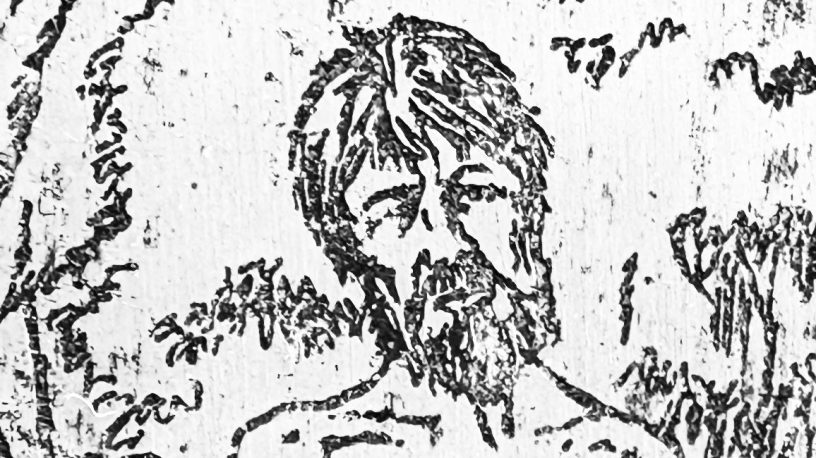
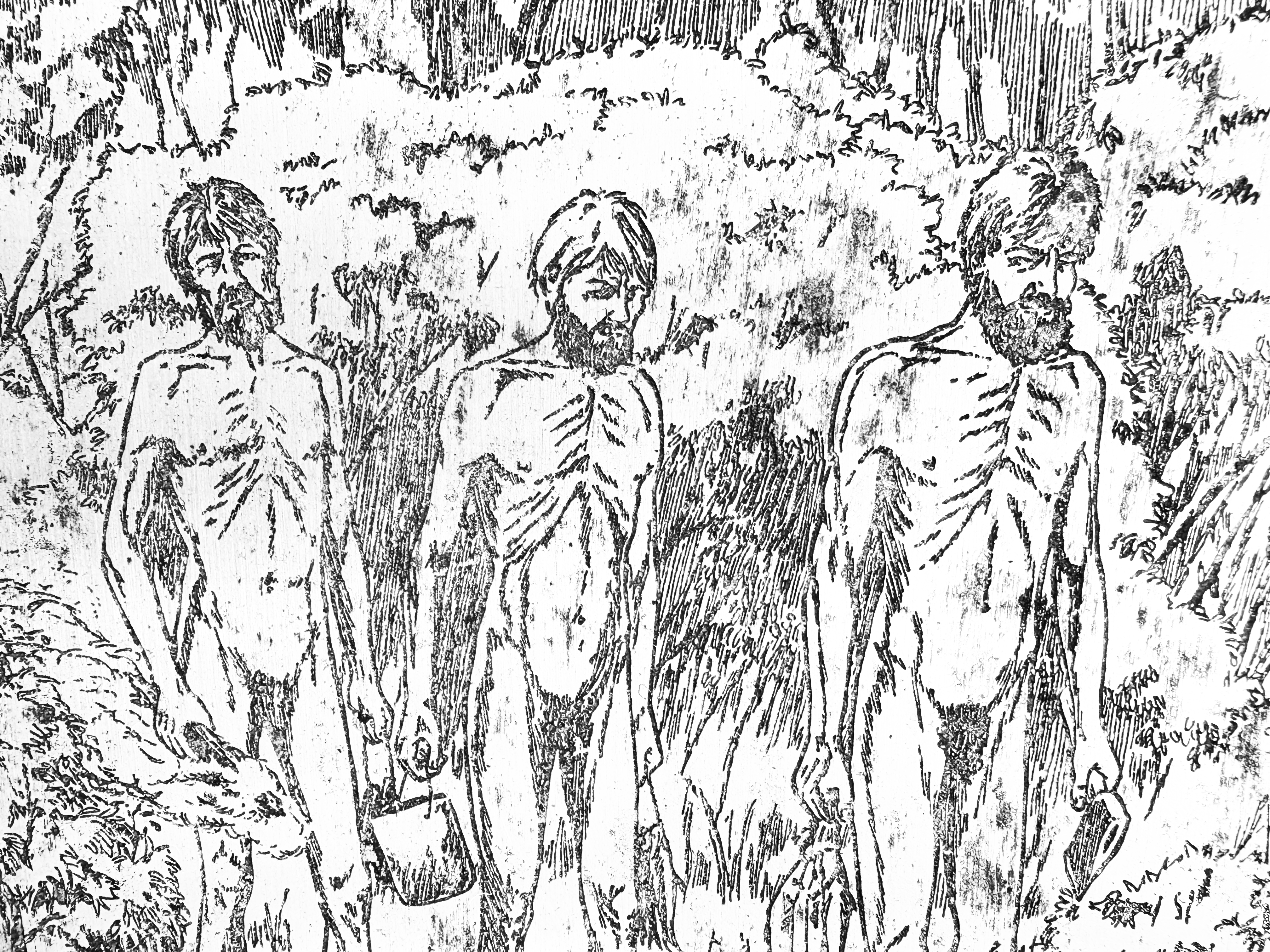
Oxley arrived, they guided him up the Brisbane River. Their knowledge directly influenced the decision to establish a settlement at Brisbane. Together, they are remembered as pioneers of Queensland’s European history. Picture: Mary Allen
Convict, shipwreck survivor, explorer and one of the most remarkable Irishmen in Queensland’s early history
John Finnegan’s name deserves to be far better known in Brisbane.
He was not a famous explorer, naval officer or colonial governor. He arrived in Australia as a transported convict and, through an extraordinary combination of bad luck and good fortune, became a castaway on the shores of Moreton Bay.
Yet it was Finnegan’s knowledge of the country and waterways that helped John Oxley locate the great river on which Brisbane would eventually be built.
His story is one of the most remarkable Irish tales in Queensland history.
From Wicklow to New South Wales
John Finnegan was an Irishman transported to Australia for life after being convicted at the Wicklow Assizes. His later petition to the colonial authorities stated that he had been tried at the March Assizes in 1814 and transported aboard the Guildford. The records surrounding his conviction and transportation are not entirely consistent on dates, but there is no doubt that Finnegan arrived in New South Wales as a convict under a life sentence.
By 1823, he was living in the colony and became involved in a small timber-getting expedition which would change his life completely.
On 21 March that year, Finnegan and three other men — Thomas Pamphlett, Richard Parsons and John Thompson — left Sydney in an open boat. Their intention was to travel south to the Illawarra district to obtain cedar.
They never got there.
A violent storm caught the small vessel and drove it far out to sea. For weeks, the men drifted helplessly, unable to control their course. Their food and water ran out and their situation became desperate.
John Thompson died during the ordeal.
Eventually, after being driven hundreds of kilometres north of Sydney, the survivors reached Moreton Island.
They had absolutely no idea where they were.
Lost — and heading in the wrong direction
Finnegan, Pamphlett and Parsons believed they had somehow landed south of Sydney. Reasoning that civilisation lay to the north, they began walking in that direction.
In fact, they were already hundreds of kilometres north of Sydney and were heading even further away from it.
The three men spent months wandering through the Moreton Bay district before encountering the broad river which would later become known to Europeans as the Brisbane River.
Their extraordinary survival story was later recorded by the colonial authorities, while Finnegan himself described enduring nine months at Moreton Bay and what he called “the utmost distress” before being rescued.
The castaways’ experience of the region would prove invaluable.
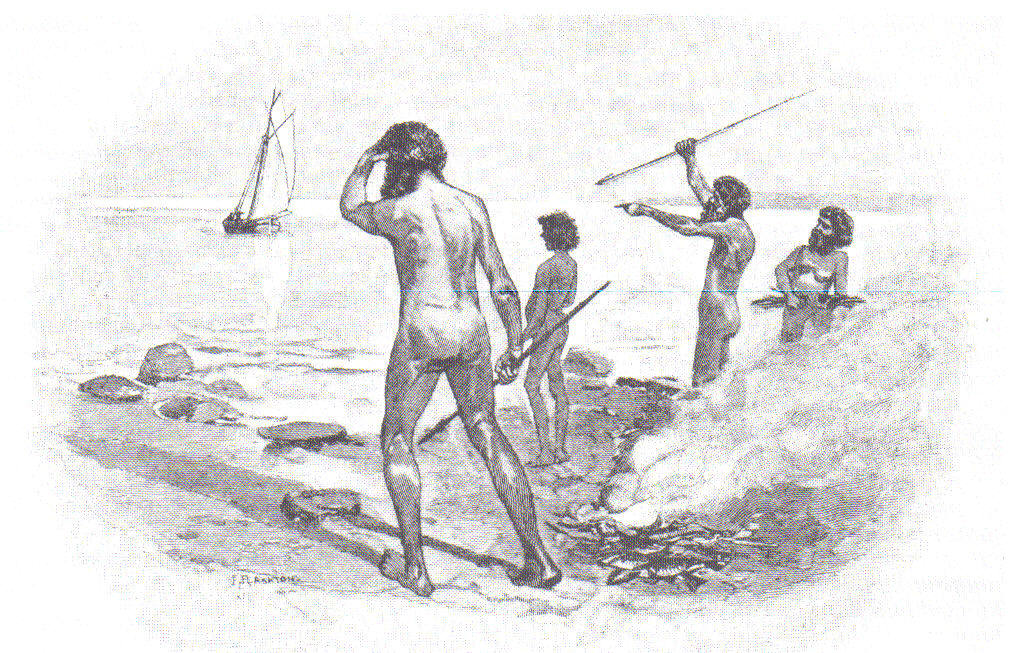
Picture depicts ‘The Finding of Pamphlet’. It shows Finnegan and his fellow convicts being rescued by John Oxley.
Meeting John Oxley
Later in 1823, Surveyor-General John Oxley arrived in Moreton Bay on an official expedition to investigate possible sites for a new penal settlement.
Oxley’s party encountered Thomas Pamphlett on Bribie Island. Finnegan was away at the time but returned shortly afterwards.
The castaways told Oxley about the large river they had discovered.
Oxley was immediately interested.
On 1 December 1823, he set out to investigate, taking John Finnegan with him as a guide. The party entered the river and travelled upstream, with Oxley eventually reporting favourably on the country and its potential for settlement.
It was an important moment in Queensland history.
Within months, plans were underway for a new penal settlement at Moreton Bay. The first establishment was founded at Redcliffe in 1824 before the settlement was moved to the Brisbane River.
And John Finnegan had played a part in making it happen.
Not simply a lucky castaway
Finnegan’s own later petition shows that his connection with Moreton Bay did not end when Oxley rescued him.
He stated that he subsequently accompanied the Governor aboard the Amity to Moreton Bay as a seaman. He also returned with Captain Gray and helped lay the moorings at the new settlement. He later made another voyage to Moreton Bay with Major Lockyer.
By October 1825, Finnegan was still seeking some reward or mitigation of his life sentence for his long service and hardships. His petition asked the Governor to take his experiences into account and grant him a Ticket of Leave.
This is an important detail.
Finnegan was not merely rescued and forgotten. He continued to have a role in the early development of the Moreton Bay settlement and had practical knowledge of the district at a time when very few Europeans did.
His remarkable experiences had transformed a transported Irish convict into someone whose knowledge was useful to explorers, soldiers and colonial officials.
The mystery of what happened next
And then the trail grows cold.
One of the most intriguing stories surrounding John Finnegan is that he eventually returned to Ireland. According to author Al Finegan, after returning home, John opened a pub in Dublin called Castaways.
It would certainly be a remarkable final chapter: an Irishman transported for life to the other side of the world, shipwrecked on Moreton Bay, involved in the discovery of the Brisbane River and the establishment of the new settlement — and then somehow finding his way back to Ireland to become a publican.
A forgotten Irish Queenslander
John Finnegan’s contribution to Brisbane’s history has often been overshadowed by the much better-known John Oxley.
Oxley was the official explorer, Surveyor-General and colonial figure whose name became firmly attached to Queensland history.
Finnegan was a convict.
But it was Finnegan who had already seen the river. It was Finnegan who had survived months in the Moreton Bay district. And it was Finnegan who accompanied Oxley when the expedition went looking for the river described by the castaways.
His story is extraordinary enough without embellishment.
An Irishman transported for life.
A survivor of a terrifying journey at sea.
A castaway who spent months wandering through unknown country.
A guide to one of Australia’s most important early explorers.
And a man who helped point the way towards the river city that would eventually become Brisbane.
Whether John Finnegan eventually made it back to Ireland — and whether he really did end his days pulling pints behind the bar of an Irish pub — remains a mystery worth solving.
But whatever became of him, his place in the early story of Brisbane deserves to be remembered.
For a man who arrived in Australia in chains, John Finnegan travelled further into Queensland history than almost anyone could have imagined.

