
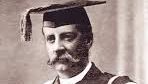
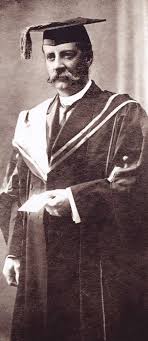
Named after America’s first president, the brilliant son of Irish famine immigrants devoted his life to education, law and public service—but died just weeks before the University of Queensland opened its doors.
The history of the University of Queensland is often told through the names of its first professors, chancellors and benefactors. Yet one of its earliest champions is largely forgotten today, despite playing a pivotal role in bringing the institution into existence.
That man was George Washington Power, the son of Irish immigrants whose family’s remarkable story stretched from the Great Famine to the boardroom of one of Queensland’s most famous breweries.
Born at Jamieson, Victoria, on 13 October 1865, George was the eldest son of William Grene Power and Mary Teresa Perkins, both descendants of Irish families. William had been born in Ireland and left during the closing years of the Great Famine, arriving in America before joining the Victorian gold rush. Inspired by the optimism and enterprise he found in the United States, he gave his first-born son the unusual name George Washington Power.
It was a name that would become well known in Queensland legal and academic circles.
The Power family settled in Brisbane in 1873, making their home at Silverwells at Kangaroo Point. William quickly established himself as one of colonial Queensland’s leading businessmen. Through his marriage to Mary Teresa Perkins, he became managing partner of Perkins & Co., one of Brisbane’s largest breweries, a company whose legacy would later become part of Castlemaine Perkins and Queensland’s famous XXXX beer. He also served in the Queensland Legislative Council from 1893 until his death in 1903.
While his father built businesses, George built an extraordinary academic reputation.
His brilliance became apparent almost immediately. At just eleven years of age he won a State scholarship before entering Brisbane Grammar School. In the Sydney University Junior examinations he finished first, collecting silver medals in four subjects. Two years later he again excelled in the Senior examinations, winning the University Prize, seven silver medals, the John West Medal for general proficiency, an exhibition to the University of Melbourne and a scholarship to Trinity College Dublin.
At Trinity College he proved equally exceptional, graduating with first-class honours in Arts after winning prizes in English, Classics, French, German and debating. He later completed both a Master of Arts and a Master of Laws, establishing himself as one of Queensland’s finest legal scholars.
The Brisbane Courier later described him as “one of the keenest and most cultured scholars in Australia.”
Although admitted to the Bar in both Victoria and Queensland, poor health meant Power rarely sought the limelight in court. Instead, he became one of the colony’s leading legal draftsmen, helping prepare important legislation, revising statutes and publishing influential legal texts, including digests of Queensland Supreme Court decisions and works on Australian property law.
Yet it was education that became his greatest passion.
In 1893, Power became one of the founding members of the University Extension Scheme, established to campaign for the creation of a university in Queensland. At a time when Queensland students often had to study through the universities of Sydney or Melbourne, the Extension Scheme offered lectures and tuition while lobbying politicians to establish a university closer to home.
Power lectured widely on Shakespeare, Ralph Waldo Emerson, Alfred Tennyson and, unusually for the period, Australian writers including Henry Kendall and Marcus Clarke. Long before Australian literature became a recognised university discipline, he believed local writers deserved serious academic study.
The campaign for a Queensland university was far from easy.
Many politicians regarded higher education as an unnecessary luxury, arguing it would serve only a privileged Brisbane elite while placing an unnecessary burden on taxpayers. Power rejected those arguments.
Addressing the University Congress in 1906, he declared: “A university is not a luxury.”
Instead, he described it as “the coping stone of the educational edifice,” arguing that Queensland desperately needed its own engineers, scientists, lawyers and professionals rather than continually losing talented young people interstate or relying on imported expertise.
His arguments helped persuade Queensland to establish its own university.
When the University of Queensland Act was passed in 1909, Power’s contribution was recognised with his appointment to the University’s very first Senate in April 1910.
It should have marked the beginning of a distinguished chapter in his life.
Tragically, it became the last.
George Washington Power attended the inaugural meeting of the University’s Senate but died unexpectedly on 19 May 1910, only five weeks later, before the Senate met again. He was just 44 years old.
At the University’s second Senate meeting, Chancellor Sir William MacGregor led tributes to the man who had worked so hard to bring the institution into existence.
The Senate recorded that George Washington Power was “by character, education and experience… eminently qualified to render valuable assistance in establishing the Queensland University.”
Vice-Chancellor R. H. Roe, who had known him since his schooldays, described him as one of the most devoted former students he had encountered in more than thirty years in education.
Power left behind his wife Josephine Philomena Kennedy and their three children, including future surgeon Dr Thomas Felix Washington Power.
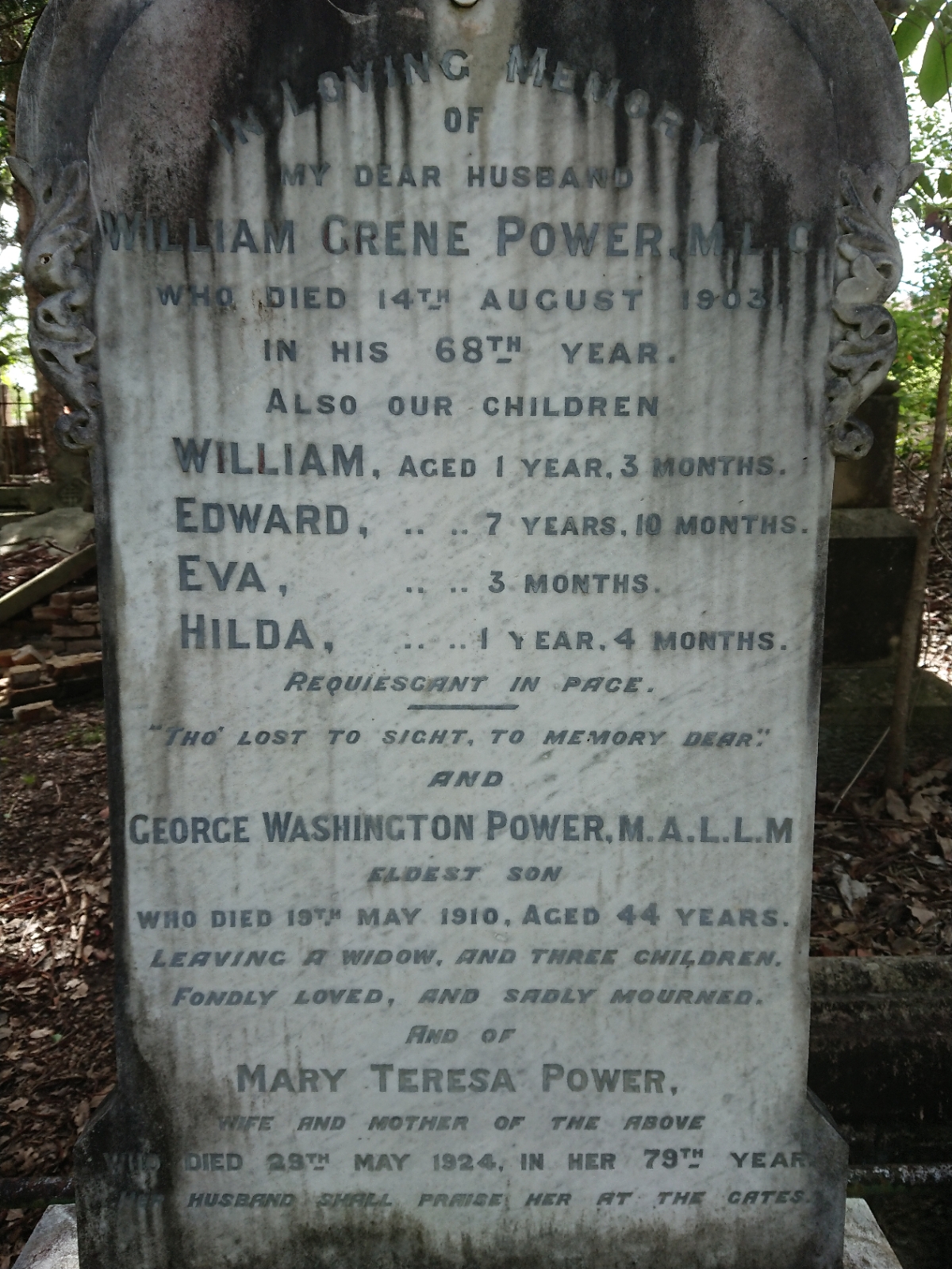
Today, thousands of students walk the University of Queensland’s campuses each year with little knowledge of the Irish Queenslander whose vision helped make the institution possible.
His story also reflects the remarkable achievements of the Power family. Within a single generation they rose from Irish emigrants who left during the Famine to become leading figures in Queensland’s brewing industry, politics, law and education.
It is a legacy that deserves to be remembered—not only by the University of Queensland, but by Irish Australians whose community helped shape many of the state’s great institutions.
Main picture: George Washington Power. Picture: University of Queensland

