
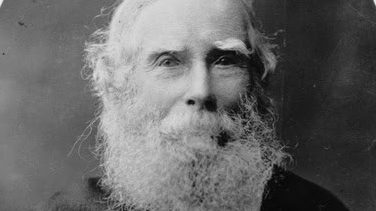

When visitors wander beneath the palms and flowering trees of Cairns’ Flecker Botanic Gardens today, they are enjoying the legacy of an Irish-born pioneer whose passion for plants helped transform a tropical wilderness into one of Queensland’s most treasured gardens.
Eugene Fitzherbert Albini Fitzalan was born in Derry in 1830. A gifted naturalist from an early age, he developed a fascination with plants that would take him across continents and eventually lead him to become one of Australia’s most important nineteenth-century botanists.
Before coming to Australia, Fitzalan collected botanical specimens in England and Mexico, building the knowledge and experience that would shape his later career. He arrived in Australia in 1849 and soon began exploring the country’s remarkable plant life.
His botanical journeys took him through Victoria and along the Queensland coast, where he collected specimens from some of the most remote and unexplored regions of the colony. In 1863 he explored Mount Elliot near Townsville, and in 1875 he investigated the Daintree region, documenting the extraordinary diversity of tropical Queensland.
Fitzalan established nurseries in Geelong, Brisbane and Bowen, supplying specimens to botanical collections and contributing material to the Herbarium of Victoria. Some of his collections were also sent to the famous Royal Botanic Gardens at Kew in London, placing Queensland’s flora before an international audience.
In 1861, Fitzalan played a role in the establishment of Bowen, then known as Port Denison, arriving with his family and Captain Henry Sinclair during the early settlement of the town. His contribution to the region was later recognised with several places bearing his name, including Fitzalan Island and Fitzalan Passage near Whitsunday Island.
But it was in Cairns that Fitzalan would leave his greatest mark.

Arriving in the growing northern settlement in 1886, he entered into an agreement with the Cairns Municipal Council to develop an ornamental garden on a recreation reserve. As caretaker of the reserve, he transformed around five acres of land—part of which had previously been used as Chinese market gardens—into a flourishing tropical botanical garden.
Originally known as Rosebank or Fitzalan’s Botanical Gardens, the site became a showcase for exotic and native plants. Between 1887 and 1891 Fitzalan landscaped the grounds, created garden beds, built fences to keep out wandering goats, constructed a small cottage and established the Edge Hill Nursery to propagate seedlings and cuttings.
His gardens featured an extraordinary collection of plants, including around fifty varieties of roses, eleven types of hibiscus, orchids, ferns, rain trees, native myrtles and many species collected from the nearby Mount Whitfield Range. He also experimented with tropical agriculture, growing coffee and grafting citrus and mango trees for local residents.
Fitzalan’s work extended far beyond Cairns. He exported orchids, palms, ferns, seeds and other specimens to Europe while also testing plants from other parts of Australia to see how they would adapt to the tropical north.
His contribution to science was recognised through the naming of numerous plant species in his honour, including Atractocarpus fitzalanii, Eria fitzalanii, Macropteranthes fitzalanii and Psychotria fitzalanii. Perhaps the best known is Randia fitzalanii, the native gardenia, which remains widely used in horticulture today.
After years devoted to his beloved gardens, Fitzalan was forced to retire in 1897 due to ill health. He later moved to Brisbane, where he died at West End on June 20, 1911.
He was buried in South Brisbane Cemetery, although his final resting place remains unmarked.
More than a century after his death, Fitzalan’s influence can still be seen in Cairns. The Flecker Botanic Gardens feature the Fitzalan Gardens, a memorial area containing three linked gardens with pathways, footbridges, a water lily pond and mature palms—a living tribute to the Irishman whose vision helped establish Cairns as a centre of tropical botanical beauty.
From Derry to Queensland’s far north, Eugene Fitzherbert Albini Fitzalan devoted his life to discovering, cultivating and sharing the natural wonders of the world around him. His legacy continues to grow with every tree, flower and tropical garden that bears the mark of his pioneering work.

