
The Clonmel-born businessman helped build one of Brisbane’s great brewing names before entering Queensland politics.
Among the Irish names resting at Brisbane’s Toowong Cemetery is William Grene Power, a County Tipperary-born businessman, brewer and politician whose life story links Irish migration, Queensland enterprise and the beginnings of one of the state’s most famous beer traditions.
Born in Clonmel, County Tipperary, on 24 September 1835, Power was educated at Carlow College before leaving Ireland and making his way to Australia. Like many Irish migrants of his generation, he arrived in a country where opportunity depended on ambition, connections and hard work.
His marriage brought him into one of Queensland’s best-known business families. Power married Mary Teresa Perkins, a member of the Perkins family whose name would become permanently associated with Queensland brewing.
The Perkins story began with brothers Patrick and Thomas Perkins, who moved from Victoria to Queensland and established brewing interests, first on the Darling Downs before expanding into Brisbane. Patrick Perkins purchased the City Brewery in Brisbane in 1872, laying the foundation for what became Perkins & Co.
William Grene Power became deeply involved in the company, serving as managing partner of Perkins & Co Brewery. Along with Edward Naumberg, he helped oversee the growth of the business at a time when brewing was one of colonial Brisbane’s major industries.
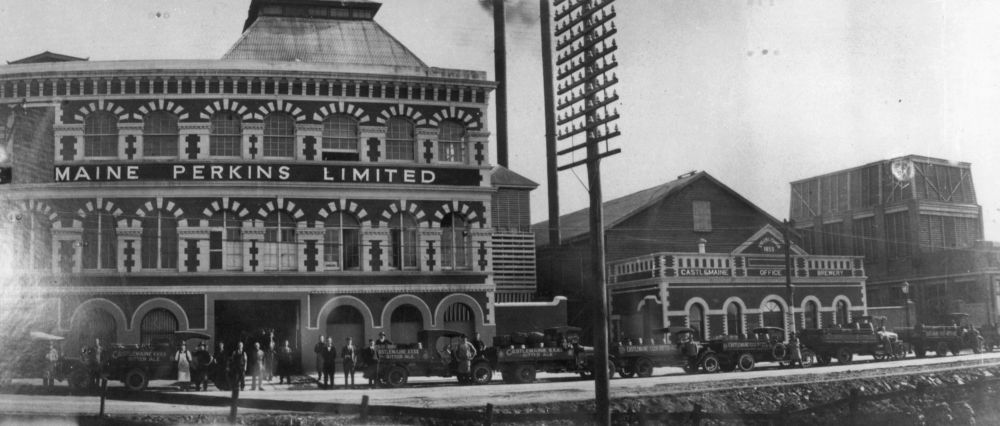
The Perkins brewery became one of the most important brewing operations in Queensland. Its Brisbane premises dominated part of the city, with the Mary Street brewery complex becoming a familiar landmark. The company expanded its production, hotels and distribution network and became a major competitor in Queensland’s brewing industry.
The Perkins name would later become part of the story of Castlemaine Perkins, the company behind Queensland’s iconic XXXX beer. In 1928, Perkins & Co was acquired by Castlemaine Brewery, creating Castlemaine Perkins and bringing together two major Queensland brewing traditions.
But Power’s influence extended beyond business.
In 1883, he was appointed to the Queensland Legislative Council, where he served for twenty years until his death. As an appointed member of the Upper House, he represented the type of colonial figure who combined commercial success with public service.
He was also part of Brisbane’s growing Irish Catholic professional community. His Irish education, marriage into the Perkins family and business achievements placed him among the prominent Irish Queenslanders of the late 19th century.
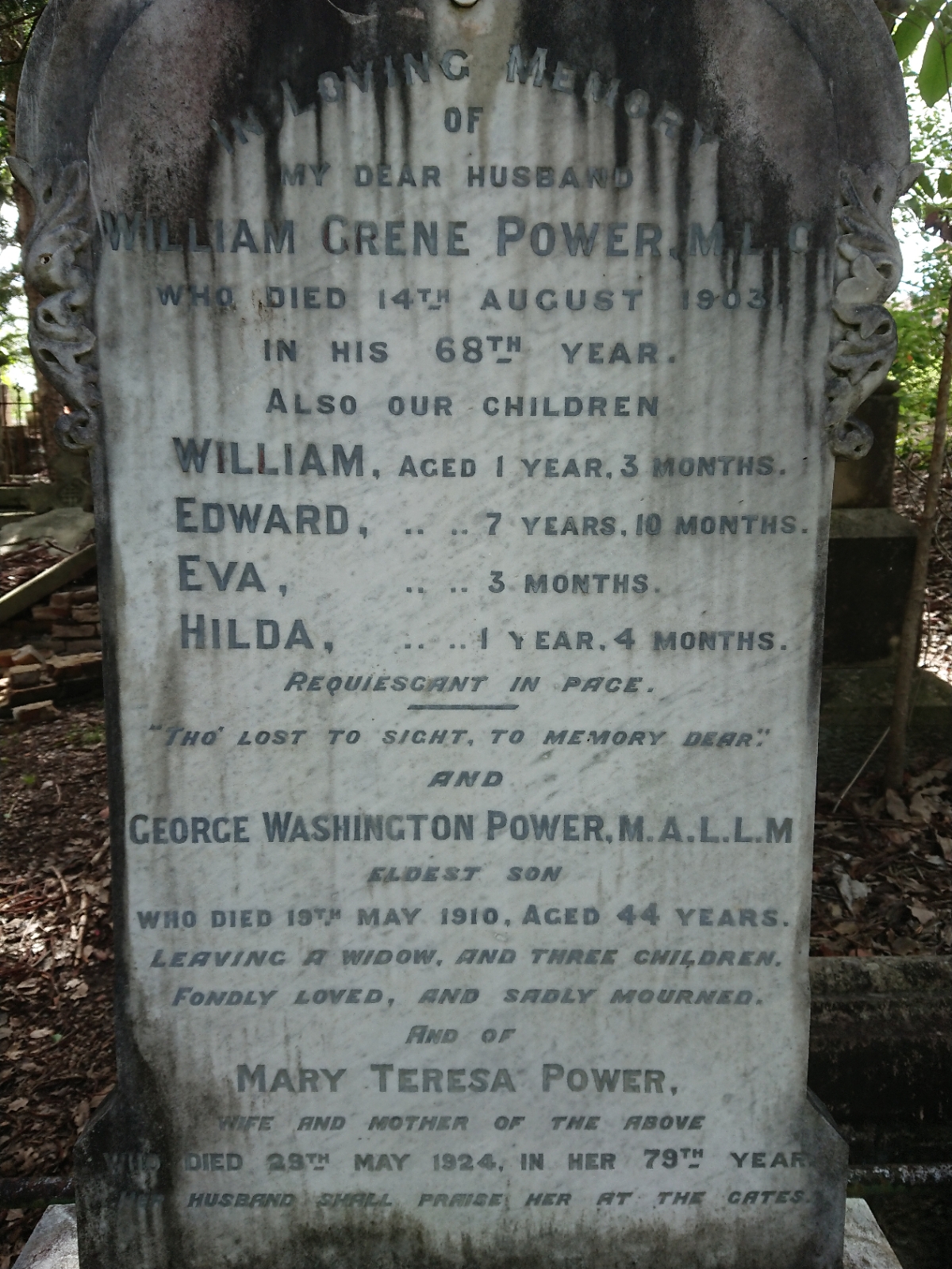
William Grene Power died at Nundah, Brisbane, on 14 August 1903, aged 67, and was buried at Toowong Cemetery.
His grave marks the resting place of a man whose story connects two worlds: the old Irish town of Clonmel and the rapidly developing colony of Queensland.
His son George Washington Power, named after America’s first president, devoted his life to education, law and public service— he was central to the establishment of the University of Queensland but died just weeks before the college opened its doors.
For Irish Queenslanders today, William Grene Power’s legacy is found not only in politics and business records, but also in a brewery story that helped shape one of Queensland’s most recognisable brands.
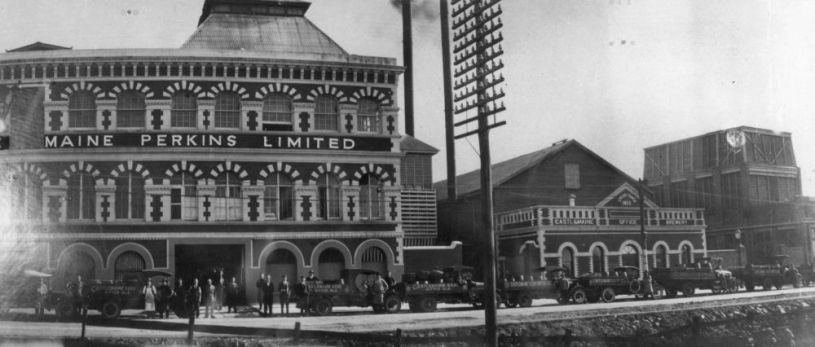
Top picture: View of the Castlemaine Perkins Brewery in Milton, ca. 1929. The brewery, located in Milton Road, was established in 1878 by Fitzgerald, Quinlan and Co. and called the Castlemaine Brewery. The brewery merged with Perkins and Company in 1928. — State Library of Queensland.

