
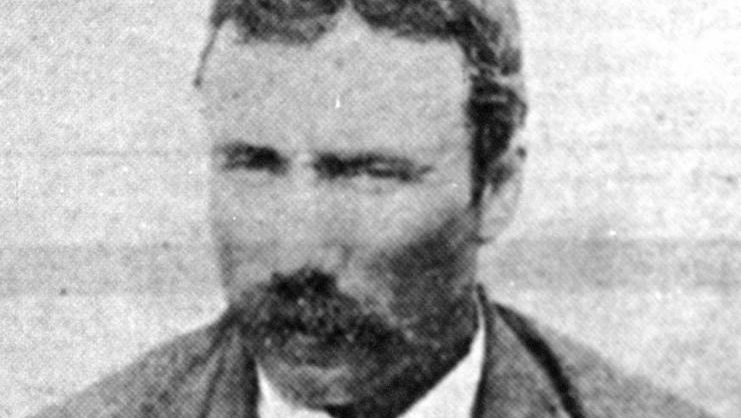
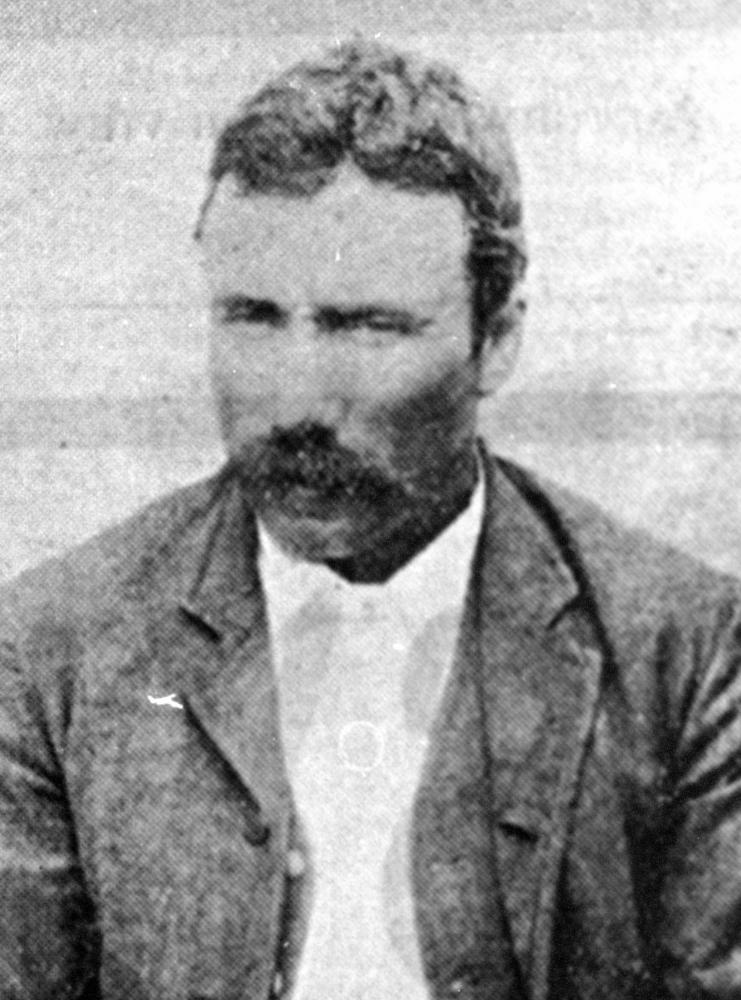
The notorious Irish-Australian bushranger whose exploits became legend in Queensland’s western pastoral frontier
The Kenniff brothers remain among Queensland’s most notorious bushrangers, their story becoming one of the state’s most dramatic tales of crime, frontier justice and Irish-Australian folklore.
Patrick Kenniff was born in 1865 near Mitchell on Queensland’s western frontier to Irish immigrant parents from County Kerry. His father, John Kenniff, and mother, Bridget Murphy, had left Ireland during the difficult decades that followed The Great Hunger (famine), joining thousands of Irish migrants seeking a new life in colonial Australia. Like many Irish Catholic settlers, the family found themselves scratching out a living in the harsh, isolated pastoral districts of western Queensland.
Patrick and his older brother James Kenniff grew up in a landscape where vast cattle stations, sparse police presence and enormous distances often blurred the line between lawful survival and criminal opportunity. The brothers became skilled horsemen and bushmen, working on stations before drifting into cattle stealing, horse theft and armed robbery.
Throughout the 1890s, the Kenniffs built a reputation as accomplished bushrangers. They were suspected of stealing cattle across the Maranoa and Warrego districts, altering brands and moving stock through remote country where detection was difficult. At a time when drought and economic depression placed enormous pressure on small settlers and station workers, the brothers acquired a certain notoriety, with some seeing them as dangerous criminals and others admiring their ability to outwit authorities.
Everything changed in March 1902.
Police Constable George Doyle and station manager Albert Dahlke travelled to Lethbridge’s Pocket, near Yuleba, to investigate allegations of cattle stealing involving the Kenniff brothers. Neither man returned.
A search party discovered a horrific scene. Doyle’s horse was found wandering riderless, while nearby were the remains of a campfire containing burnt human bones, fragments of clothing, revolver cartridges, buttons, belt buckles and other personal effects. Investigators concluded that Doyle and Dahlke had been murdered, their bodies dismembered and burned in an apparent attempt to destroy the evidence.
The brutality of the crime shocked Queensland.
Although the remains were incomplete and no eyewitness had seen the killings, police believed the Kenniff brothers had ambushed the two men after luring them into isolated scrub country. A massive manhunt followed, involving police, Aboriginal trackers and local volunteers, becoming one of the largest criminal investigations in Queensland’s history.
James Kenniff managed to evade capture and was never brought to trial for the murders. Patrick, however, was arrested after an extensive search and stood trial in Brisbane later that year.
The case attracted enormous public attention and remains controversial among historians.
The prosecution relied almost entirely on circumstantial evidence, arguing that Patrick had participated in the murders despite the absence of direct eyewitness testimony. His defence maintained that the evidence was insufficient to prove guilt beyond reasonable doubt, and debate has continued for more than a century over whether Patrick received a fair trial.
Nevertheless, the jury found him guilty of murdering Constable Doyle and Albert Dahlke.
Patrick Kenniff was sentenced to death and hanged at Boggo Road Gaol on 12 January 1903. He was 37 years old.
He was buried in the nearby South Brisbane Cemetery in the unconsecrated section reserved for executed prisoners. Unlike many executed inmates, however, his grave was later marked with a headstone, making it one of the cemetery’s more unusual memorials.
The Kenniff story has endured in Australian folklore ever since, inspiring books, songs, stage productions and historical debate. For some, Patrick Kenniff remains simply a convicted murderer whose crimes brought an end to Queensland’s bushranging era. Others view him as a symbol of the conflict between poor Irish frontier families and the pastoral establishment during a turbulent period of Queensland’s history.
More than 120 years later, the Kenniff brothers continue to occupy a unique place in Queensland history, where fact, folklore and legend have become almost impossible to separate.

