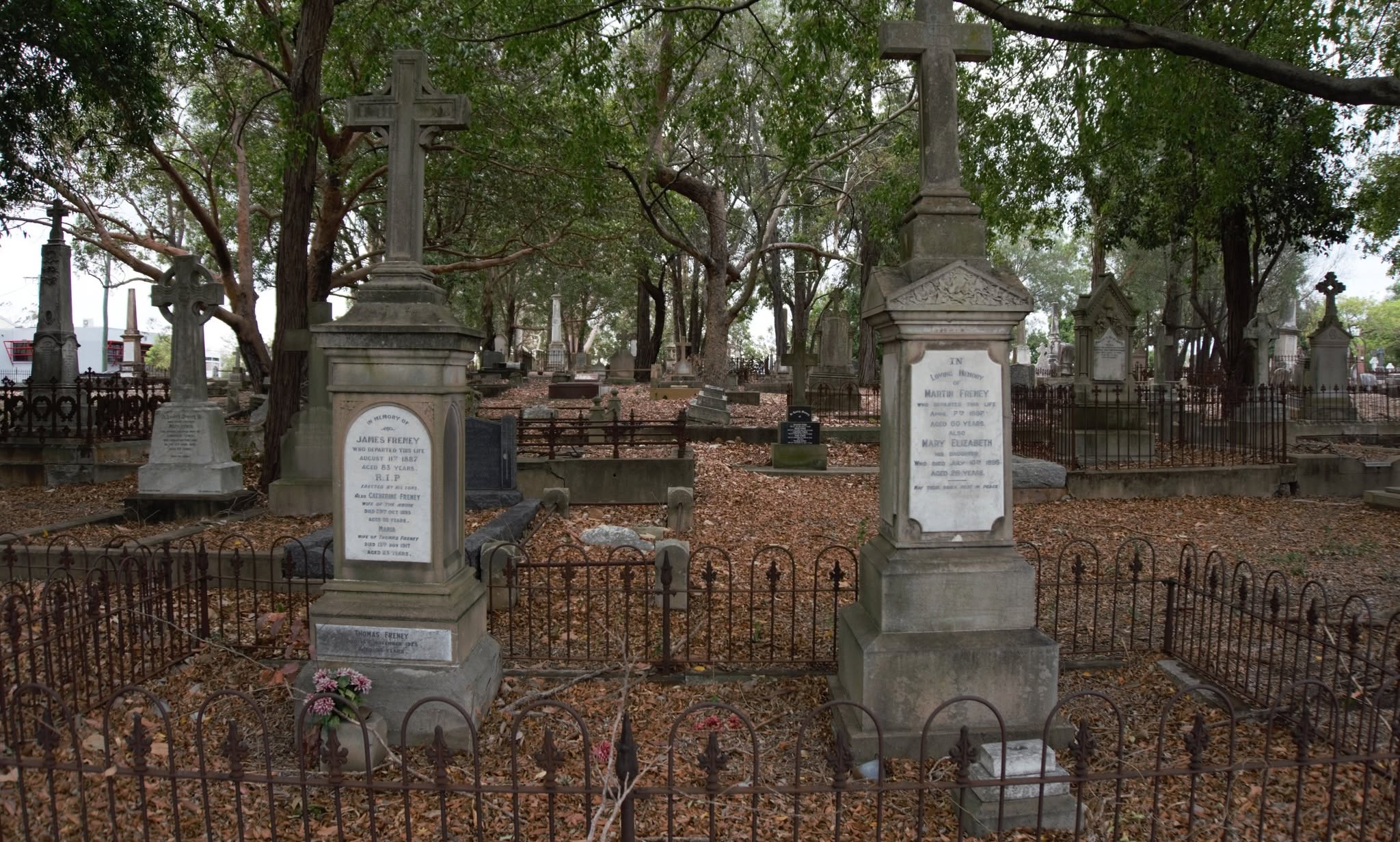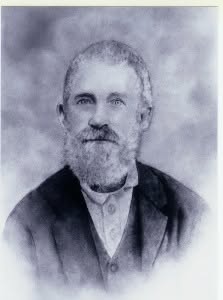
The story of the Freney family is one of resilience, faith and community spirit—a journey that began in County Wexford, Ireland, and ended with a lasting legacy in Brisbane’s southern suburbs.
James Freney’s life had already been marked by tragedy before he ever set foot in Australia. In 1840, his wife Ann (née Skelton) died shortly after the birth of their fifth son, Patrick. Left to raise a young family, James later married Catherine Murphy, and together they made the life-changing decision to leave their home in Wexford and seek a new future in Australia.
In 1842 James, Catherine, their children Thomas, Michael, Martin, Matthew and Patrick, along with James’ widowed sister Anne, boarded the ship Hope bound for Australia. After a long voyage, the family arrived in Sydney on January 29, 1842.
Their new beginning was soon touched by further sorrow. Little Patrick, only 21 months old, died shortly after the family’s arrival.
Like many Irish immigrant families, the Freneys continued despite hardship. They moved north to the New England district of New South Wales, where James found work with pastoralist Arthur Palmer. Another son, Edward, was born there in 1844.
By 1850 the family had continued north into Queensland, first spending a short time in Ipswich before settling in Brisbane. In 1851 James purchased 56 acres of land at Coopers Plains, establishing a home and a future for his growing family in the young colony.
The Freneys quickly became part of the fabric of the local community.
Their eldest son, Thomas, followed a path of education and public service. He married in 1855 and by 1860 was working as a teacher. He later qualified as a surveyor, became a Justice of the Peace, and played an important role in local government. He served for many years on the Stephens and Yeerongpilly Divisional Boards before becoming a councillor and later chairman of Yeerongpilly Shire Council.
But for Thomas, service to the community was not only about roads and government—it was also about faith.
For Catholic families living in Brisbane’s southern districts in the nineteenth century, attending Mass often meant travelling long distances. Determined that local Catholics should have a place of worship closer to home, Thomas donated land for a church.
The Queenslander newspaper reported on May 11, 1875:
“A very neat Catholic chapel has been erected on a nice rising site, the gift of T. Freney, Esq., J.P., our district surveyor.”
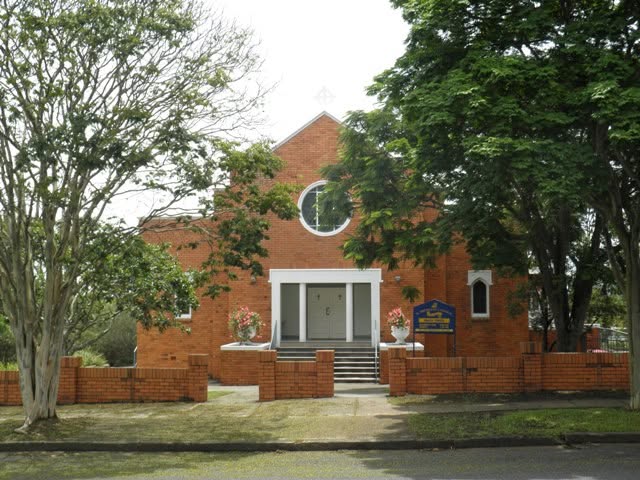
The small wooden church became the third Catholic church established on Brisbane’s southside. Named St Patrick’s, it honoured Ireland’s patron saint and also carried a personal connection—the memory of Thomas’ baby brother Patrick, who had died soon after the family’s arrival in Australia.
Located on Beatty Road, Acacia Ridge, opposite what is now James Freney Park, St Patrick’s became a centre of worship and community life for local Catholic families.
As the area grew, the timber church was eventually dismantled, with proceeds from the sale of the materials contributing towards a new Catholic church at Moorooka. On December 15, 1918, Archbishop James Duhig blessed the foundation stone of the new church at the corner of Hawtree Street and Hamilton Road. St Brendan’s Church opened on March 16, 1919, with the altar stone and some pews transferred from the old St Patrick’s Church.
The first wedding held there was that of James Curley and Muriel Freney in October 1919, further continuing the Freney family’s connection with the church they had helped establish.
When Thomas Freney died in 1925, his funeral was held at St Brendan’s before he was laid to rest in one of the Freney family graves at South Brisbane Cemetery.
The story of the Freneys is one shared by many Irish families who arrived in Queensland during the nineteenth century. They came with little more than determination, faith and hope for a better future, yet through hard work and community service they helped build the towns and neighbourhoods that followed.
Today, James Freney Park stands as a reminder of this pioneering family and their contribution to Brisbane’s history.
From a small farm at Coopers Plains to churches, councils and community life, the Freney family’s Irish roots grew deep in Queensland soil.