
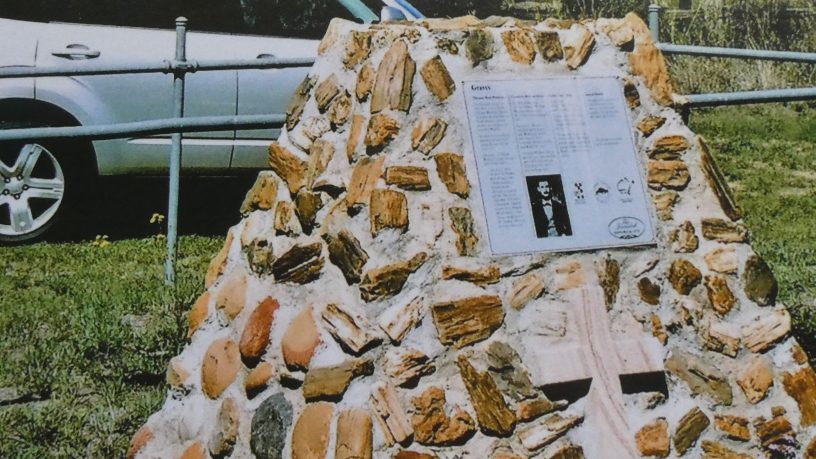
Today, June 11, 2026, is Thank a First Responder Day, a national day of appreciation for police, ambulance, fire, and emergency service personnel in Queensland and across Australia. It is a day to recognise their courage and sacrifice in keeping communities safe.
In colonial Queensland, Irish-born and Irish-descended police officers regularly found themselves riding into danger across some of the harshest and most lawless parts of the colony. Long before patrol cars and radios, these men travelled on horseback through isolated bush country, escorting gold, tracking fugitives and trying to keep order in a rapidly expanding frontier society.
Some never came home.
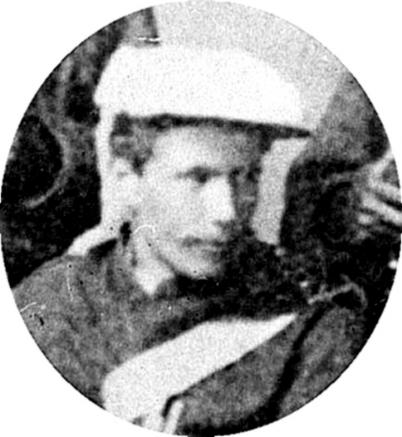
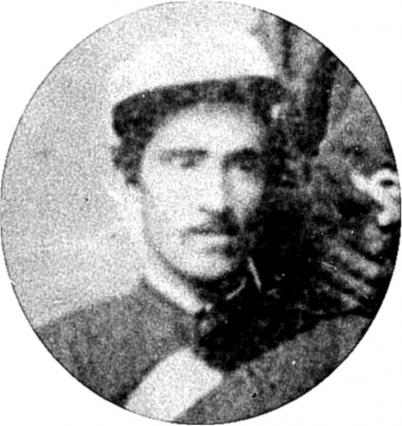
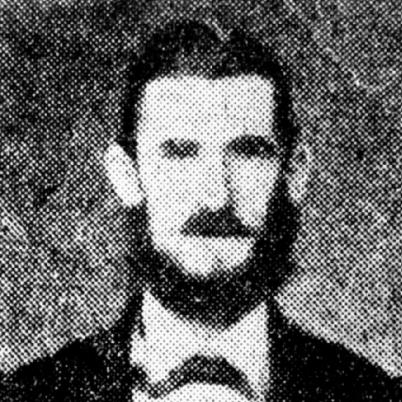
From left, Patrick Cahill, John Power and William Dwyer. Pictures: Queensland Police Memorial
The murder of Constable William Dwyer in 1883 was not an isolated tragedy.
Dwyer’s death near Taroom remains among the most dramatic. The young constable was part of a police patrol hunting the outlaw known as Wild Toby in January 1883. Near Juandah Station, Dwyer leapt from his horse and attempted to overpower the fugitive, but Toby — covered in pig fat to make himself difficult to grab — broke free and struck Dwyer in the head with a tomahawk. Senior Constable Wright shot Toby dead, but Dwyer died soon afterwards from his injuries.
The story quickly entered Queensland folklore. Wild Toby became one of the colony’s most infamous bush outlaws, while Dwyer was remembered as a brave constable who died trying to protect settlers in central Queensland. His death highlighted just how dangerous bush policing could be in the nineteenth century, particularly in remote districts where officers often operated days away from reinforcements.
Yet an even darker case had shocked Queensland years earlier.
In 1867, Constables Patrick William Cahill and John Francis Power became the first Queensland police officers murdered in the line of duty. Both men were escorting gold and bank notes from Rockhampton to Clermont during the height of the central Queensland gold rush. Travelling with them was Gold Commissioner Thomas Griffin, a respected government official and Crimean War veteran.
But Griffin was hiding serious gambling debts.
According to later investigations, Griffin planned to steal the gold escort money and stage the crime as a bushranger attack. Near the Mackenzie River crossing, Cahill and Power were poisoned, then shot in the head while they slept. Their bodies were discovered days later by a bushman.
The murders horrified colonial Queensland. Griffin was arrested, tried and eventually confessed before being hanged in Rockhampton in 1868. The killings exposed the dangers faced by early police escorts, who routinely transported huge sums through isolated country with little protection.
Irish migrants were heavily represented throughout Australian police forces during the nineteenth century. For many newly arrived Irishmen, policing offered stable wages, social standing and a career path in a rough colonial society.
The Queensland Police Force itself had strong Irish influences from its earliest years.
William Geoffrey Cahill was Queensland’s first Irish-born police commissioner. Cahill came from Strokestown in County Roscommon and served in the Royal Irish Constabulary before emigrating to Queensland in 1878. He became Queensland’s third Police Commissioner in 1905.
And Patrick Glynn was an Irish-born policeman who rose from constable to become Queensland’s first Deputy Commissioner and later Commissioner of Police. Patrick Glynn also served in the Royal Irish Constabulary before emigrating to Australia in the early 1920s. He joined the Queensland Police Force in 1922, and in 1955, he rose to the top as Police Commissioner, steering the service through a period of major modernisation before retiring in 1957. Glynn’s career stands as a classic story of Irish diligence and quiet determination shaping Queensland’s institutions.
The deaths of Cahill, Power and Dwyer became especially significant because they entered Queensland police memory early. Today, all three officers are commemorated on the Queensland Police Memorial in Brisbane. Memorials also stand near the sites where the murders occurred.
The story of Cahill and Power still resonates strongly in central Queensland. In 2017, communities gathered near Bedford Weir to mark 150 years since their murders. Historians described the killings as one of the colony’s “most sordid crimes”, involving greed, betrayal and the murder of two young officers carrying out their duty.
Not all officers’ deaths were so well commemorated. Although rightly recognised as a hero today, Galway-born Constable Matthew Connolly was shunned by the police force on both sides of the border for many years after his death. He was Queensland’s first police officer to die in the line of duty. On August 29, 1861, Constable Connolly, while on duty in the Gatton district, received an urgent call to deliver medicine to the sick wife of the District Magistrate.
He strapped the medicine to his chest and rode his horse onto the raging Sandy Creek Crossing, near Laidley – he never made it to the other side. His body was found the next day. The Toowoomba Chronicle reported on 5 September 1861: “MELANCHOLY ACCIDENT.— We regret to learn that Matthew Connolly, constable of the Gatton police force, was drowned on Saturday or Sunday, last, in endeavouring to cross Sandy Creek. It appears he was returning home after escorting a prisoner to Ipswich, and in crossing the above creek came to his untimely end. The deceased had been some time in the force, and was generally respected. We are sorry to say he leaves a wife and large family to mourn their bereavement.
“Perhaps the Government will at once see the necessity of having a bridge erected over the above dangerous creek, as well as several other crossing places on the same road, which are tendered impassable with very little rain.”
The drowning was a tragedy on many levels, as his Great-great-granddaughter Juanita Keegan told The Courier Mail in 2009: “After Matthew’s body was recovered, his wife Catherine took his body to Ipswich for burial but was refused Roman Catholic rites by the priest, who also forbade his internment in consecrated ground for some reason unknown.
“Retired Magistrate Colonel Gray attempted to obtain some financial relief for his wife and six children, but this was refused on the ground that perhaps it was not part of his duty to be delivering medicine for the wife of one of the magistrates, even though he was returning home after delivering a prisoner.
“Unfortunately, because his death occurred at the time of changeover of police forces between NSW and Queensland (the Queensland Police Force was officially gazetted in 1864), his death was never officially recognised by either police force until 2006.”
It took years of hard work for Mrs Keegan to convince those in power to recognise Constable Connolly as a police officer who died while performing his duties. His name is now engraved at police memorials at Ipswich, Brisbane and Toowoomba and he is remembered on the Queensland Police Memorial website.
These stories also reveal another side of Irish Australian history.
Irish migrants in Queensland are often remembered through politics, religion, labour movements or the gold rushes. But Irishmen also helped build the colony’s institutions — including the police force itself. Many served quietly in remote districts, carrying out difficult and dangerous work in an era when policing was physically brutal and often deadly.
• Thanks for your help with research to John McCormack and to Tracey Olivieri. Cover picture shows Constable William Dwyer’s grave in Wandoan. Picture: Supplied by John McCormack, Volunteer in Policing

