
Convict, constable, Darling Downs pioneer
Peter Murphy (1806 – 1878), known as “Duff” Murphy, was an Irish convict who rose to become a respected law officer and settler in Queensland.
Born in Dublin, Murphy was convicted of burglary in 1826 and transported to New South Wales aboard the Countess of Harcourt. By 1838 he was assigned to pioneering Scottish squatter Patrick Leslie. In 1840, Murphy accompanied Leslie on the expedition that opened up the Darling Downs for European settlement. At the time, Leslie had only one man with him—Murphy.
Leslie trusted Murphy so much that when he asked whether he would accompany him into unknown country, Murphy famously replied: “Go with you sir? I would go to … with you!” The remark became one of the best-known anecdotes from the exploration of the Darling Downs.
Leslie later described Murphy as “the best plucked fellow” and credited him with helping overcome the dangers of the frontier. Murphy’s loyalty and service were so valued that Leslie personally sought a ticket-of-leave for him from Governor Gipps.
Murphy is closely associated with the naming of Murphys Creek. While helping establish pastoral runs on the Darling Downs, he camped beside a creek while tending sheep and cattle, and the area became known as Murphy’s Creek.
He married Catherine Thompson in Sydney in 1842 and had several children.
He became one of Brisbane’s earliest police officers and was the first district policeman stationed at Kangaroo Point. Most of his work involved theft, drunkenness and maintaining public order in the growing settlement. Murphy was also one of the first private landowners at Kangaroo Point. When Brisbane was opened to free settlement, he purchased two allotments there, including one near the local lock-up.
In 1846 he received a conditional pardon. He was free to travel anywhere in the world except the United Kingdom and Ireland—a common restriction placed on transported convicts.
Murphy later became District Constable at Moreton Bay and rose to Chief Constable, exemplifying how transported convicts could achieve respectability.
He died in Charters Towers in 1878 and is buried in an unmarked grave in Charters Towers Pioneer Cemetery. An obituary remembered him as one of the two men who first travelled overland with Patrick Leslie to establish European settlement on the Darling Downs.
His life bridged penal servitude and Queensland’s pioneer society, leaving a lasting legacy among early Irish settlers.
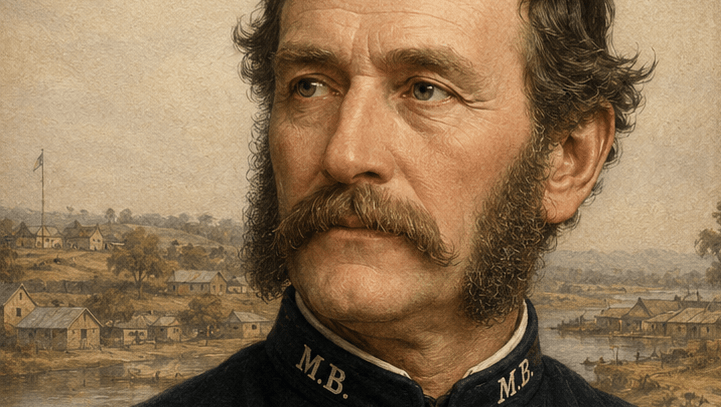
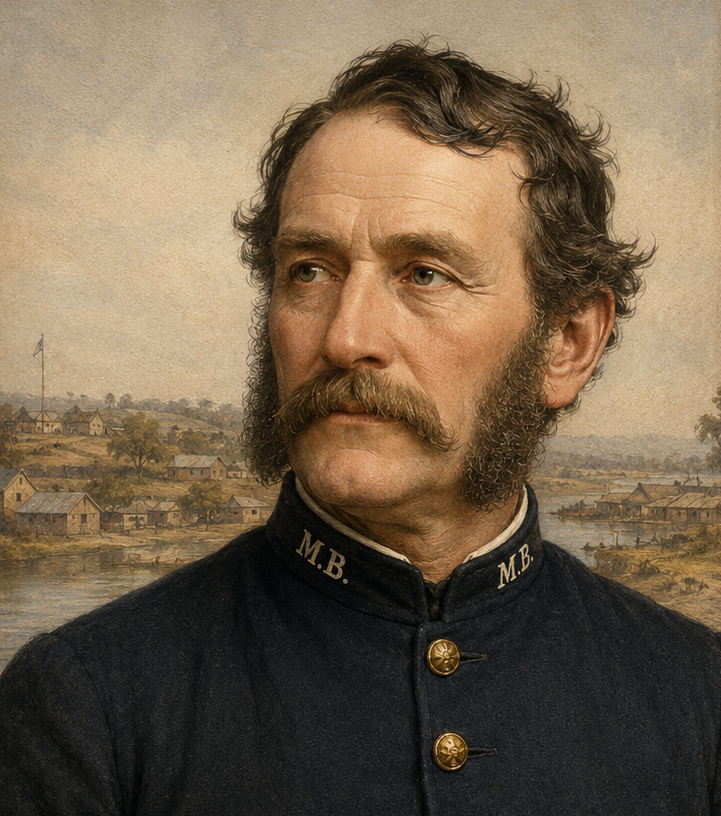
(Photograph is an AI depiction of how Peter Murphy may have looked as no images could be located. He is described as dark complexion, brown hair, brown eyes.)

