
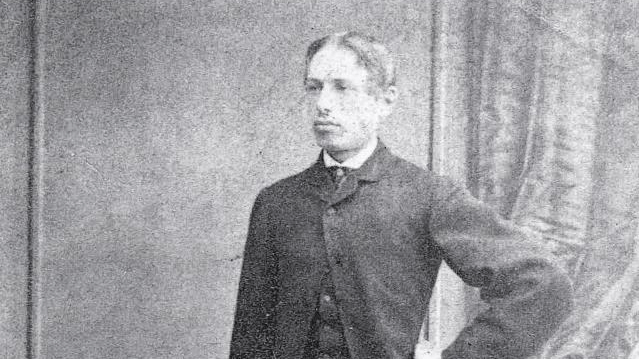

On the 151st anniversary of his death, we take a look at the legacy of one of the founding fathers of The Hibernian Society of Queensland, which later became Queensland Irish Association, Robert Travers Atkin.
Robert Atkin was a journalist and parliamentarian born in 1841, into a Protestant family in Fernhill, near Clonakilty, County Cork. Following his father’s passing when he was just three, the family relocated to France, where Robert received his education. He later moved to England and served in the militia. In 1864, he married Mary Elizabeth Ruck, a Welsh woman, in Middlesex. They had four sons, with the eldest, James Richard (1867-1944), becoming Baron Atkin and a judge in the King’s Bench.
In 1864, Atkin travelled to Queensland and spent a year in the central part of the colony. However, a chest injury from a fall off a horse impacted his health. In Brisbane, he became the editor of the Guardian but resigned due to policy disagreements.
Atkin, together with W. C. Belbridge, then established the Queensland Express in August 1868. Although the newspaper was well-written and provided valuable political insights, it couldn’t compete with the Brisbane Courier and had to cease operations in 1871. Undeterred, Atkin, along with journalists W. O’Carroll and W. W. Rutledge, launched the Colonist newspaper. Despite declining health, he managed the newspaper until shortly before his death.
In 1868, Atkin won the election for the Clermont seat in the Legislative Assembly, but his victory was challenged due to non-enrolment. He resigned in 1869. In 1870, he was elected for East Moreton but resigned in 1872, due to illness and frustration with the political situation.
Maintaining a strong connection to his Irish heritage, Atkin was an active member of the Hibernian Society of Queensland, a precursor to the Queensland Irish Association. The society aimed to promote unity between Catholic and Protestant settlers and combat bigotry in Queensland.
Atkin addressed the first general meeting of the members of this society, which was held on September 7, 1871, in the old Brisbane Town Hall in Queen Street.
Dr Kevin Izod O’Doherty explained to the gathering why the Hibernian Society had been founded. The Brisbane Courier reported that he said: “It arose out of the late election proceedings at Warwick. Your worthy vice-president, Mr Atkin, was discussing with me… the deplorable sectarian spirit which then for the first time openly exhibited itself amongst our countrymen in Queensland; and, mindful of the bitter fruits which the development of a like sectarian spirit has borne in the neighboring colony of New South Wales, we there and then determined to project a society of this kind to serve as a barrier against the bad and evil passions arising out ot these sectarian prejudices”.
Atkin resided in Hamilton, Brisbane, for a period, where his sister ran a school for young women. Later, he moved to the coastal town of Sandgate.
Robert’s son, James Richard ‘Dick’ Atkin, was born in Brisbane and later moved to Wales due to his younger brother’s delicate health. His father remained in Queensland, exemplifying the challenging separations often experienced in attempts to establish a life on the fringes of the Empire in the 19th century. Robert wrote inspiring letters to his young son, who was raised by his mother and grandmother in Wales.
Robert passed away from pneumonia on May 25, 1872. He was laid to rest in the new Anglican cemetery in Sandgate.
Upon his death, the Hibernian Society promptly initiated plans to commemorate his contributions. Within six months, they raised sufficient funds to erect a memorial over Atkin’s grave – a tall column broken at the top, symbolizing a life taken too soon. The monument stands near a spot where Atkin used to rest in Sandgate.
Dick Atkin went on to win scholarships that enabled him to study at Oxford University. After graduating, he became a barrister.
Initially facing challenges as a junior barrister due to a lack of connections and limited briefs, Atkin’s exceptional abilities and unwavering work ethic eventually garnered recognition. He rose to become a successful barrister and, later, a highly esteemed judge. In fact, many consider him to be the most influential English judge of the 20th century.
Inspired by the example of his father, Lord Atkin sat in the House of Lords and the Privy Council. His reforming judgements showed an understanding of the struggles of ordinary people, how they lived and worked.
His famous 1932 judgement in ‘The Snail in the Bottle’ case changed consumer law.
In 1943, he represented Australia on the War Crimes Commission, advocating the new idea of “crimes against humanity”. He believed in justice, not revenge.
Lord Atkin’s judgments reflected the liberal values instilled by his parents and a steadfast commitment to championing the rights of the people over the interests of the rich and powerful.
He died in 1944 but his judgements still guide the law and deliver justice throughout the world through common law.
 Irish Queenslander