
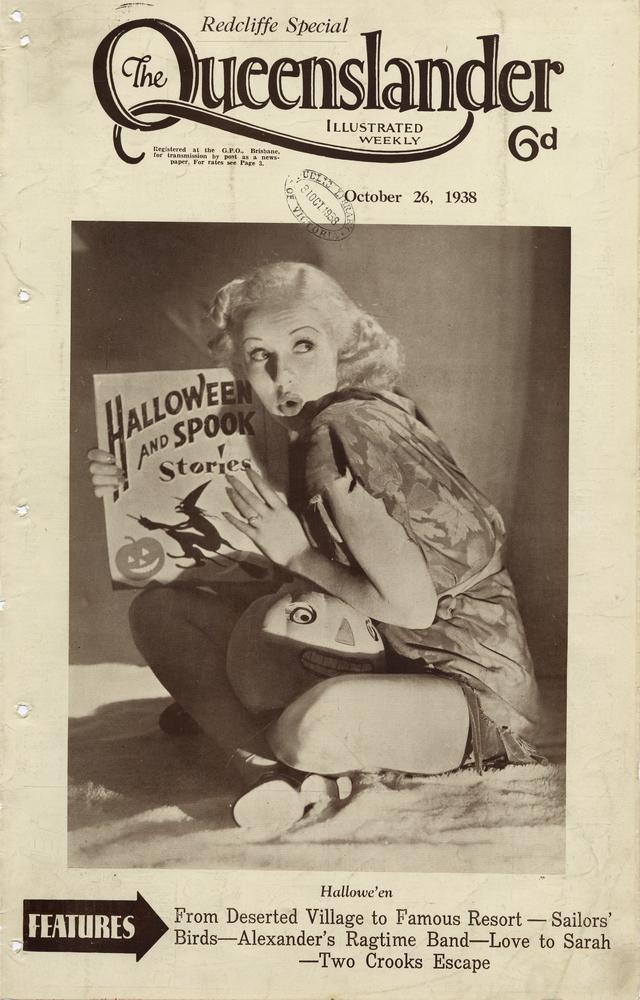
Long before Halloween became a supermarket shelf of plastic spiders and pumpkins, Queenslanders were marking All Hallows’ Eve in their own way — through concerts, dances, and society balls organised by the very immigrants who built the colony. For them, it wasn’t a foreign import but a cherished piece of home carried across the seas.
The first Halloween celebration in Australia was held in Castlemaine, Victoria in 1858. The gold-mining town held a Castlemaine Select Scottish Ball at the Red Hill Hotel on Friday, October 29th 1858.
In Queensland, the earliest mentions date back to the 1860s, when the Scots were already bringing the spirit of Halloween to the goldfields and coastal towns. In The Nashville Times, Gympie and Mary River Mining Gazette of 30 September 1868, a concert by Mr George Leopold advertised a performance of “Halloween or The Scotch Dancers” — proof that the old-world festival had reached Queensland’s mining towns within decades of settlement.
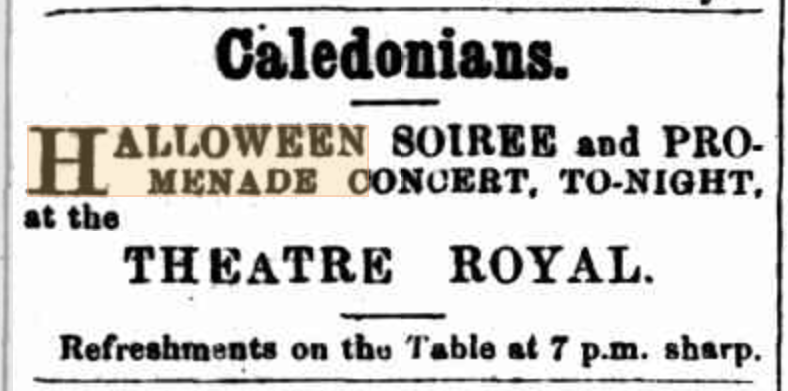
Just a few years later, the Maryborough Chronicle of 31 October 1871 praised the efforts of townsfolk “of Scottish origin” who planned to celebrate “the mystic eve of All Hallows” in traditional fashion, writing that “all honour” was due to those “for their endeavour to keep alive traditions so unexceptionable.” The reporter described the event at the Theatre Royal as “one of the best-planned, and to all expectation most agreeable reunions that have ever taken place in Maryborough.”
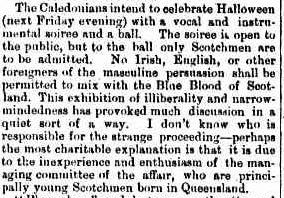
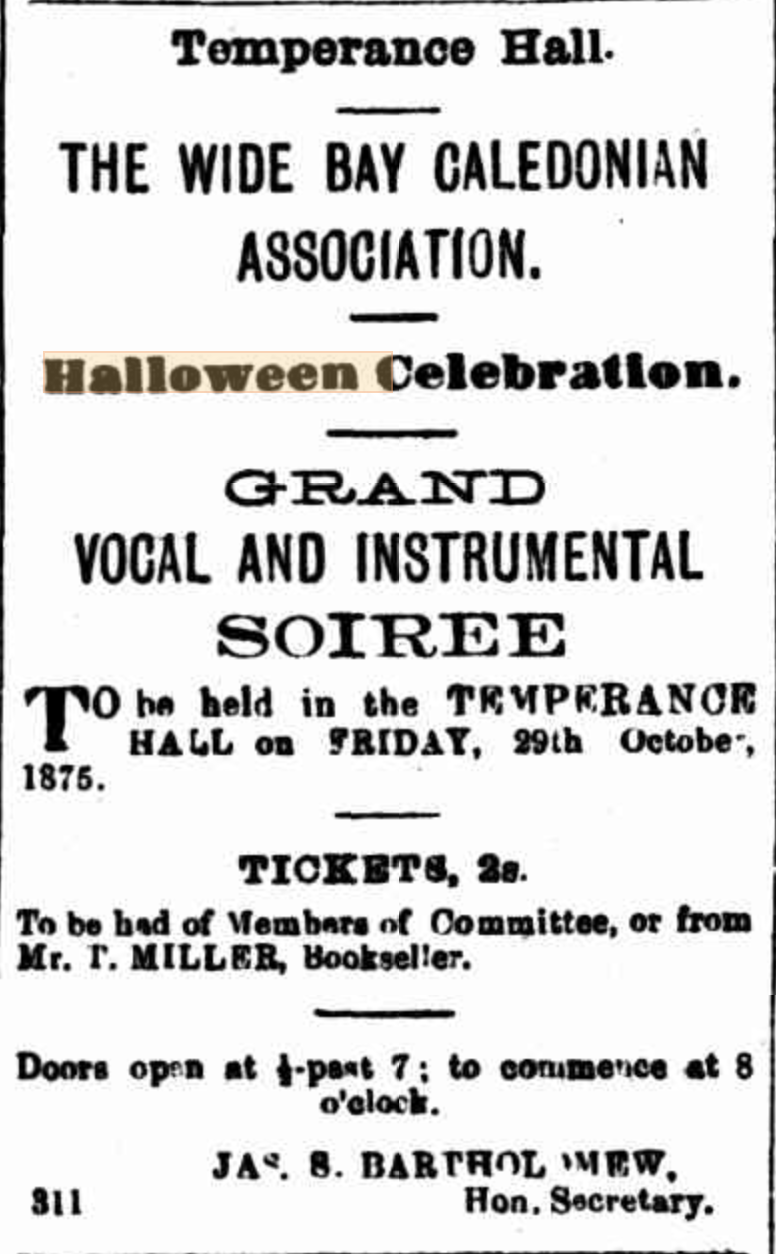
Maryborough Chronicle, Wide Bay and Burnett Advertiser, Tue 26 Oct 1875
Not all celebrations were quite so harmonious. On 27 October 1875, The Gympie Times and Mary River Mining Gazette reported a Halloween soirée and ball planned in Maryborough, noting with some amusement that the Caledonian organisers would allow only Scotsmen to the dance:
“No Irish, English, or other foreigners of the masculine persuasion shall be permitted to mix with the Blue Blood of Scotland… This exhibition of illiberality and narrow-mindedness has provoked much discussion.”
Despite such rivalries, Halloween became more mainstream. By the 1890s, more than a thousand newspaper reports per decade mention Halloween celebrations across Queensland. The popularity of the festival peaked in the 1920s, when more than two thousand mentions of Halloween appeared in local papers — from dances and concerts to charity evenings and fancy-dress balls.
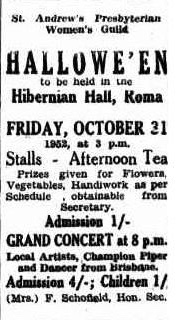
The Hibernian Hall in Roma became one of the most enduring venues. Its annual Halloween festivals were full-day community affairs, with stalls, afternoon teas, and prizes for flowers, vegetables, and handiwork. The evening’s concert featured pipers and dancers from Brisbane, all organised by the St Andrew’s Presbyterian Women’s Guild — showing that, even in the bush, the Celtic spirit ran deep.
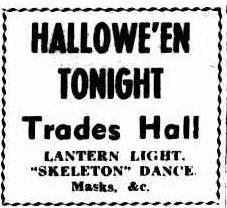
By the mid-20th century, Halloween had grown into a statewide social event. The Brisbane Telegraph of 27 October 1950 advertised Brisbane’s Merchant Navy Club hosted a Halloween Dance with St Andrew’s Ex-Servicemen’s Band, while the Christ Church Hall in Milton promised “a good night’s entertainment for young and old.” At the Trades Hall, revellers were invited to a night of “Lantern Light, Skeleton Dance, and Masks.”
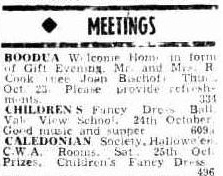
Halloween became an annual fixture. In 1951, the Brisbane Telegraph promoted a “Halloween Carnival Dance” organised by the Australian Scots Association, complete with “balloons, streamers, novelties, and supper.” A year later, the Toowoomba Chronicle advertised a Caledonian Society Halloween celebration at the CWA Rooms, with prizes and a children’s fancy-dress competition.
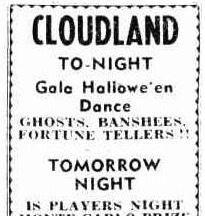
In 1953, the Brisbane Telegraph advertised a Gala Halloween Dance at Cloudland “featuring Ghosts, Banshees, and Fortune Tellers.”
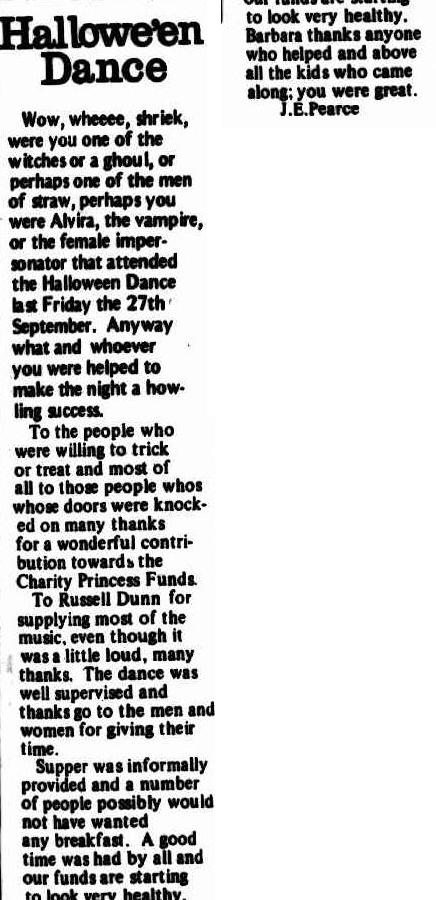
By the 1960s, Halloween dances and parties were still held across the state, though the custom began to fade. The Noosa News of 3 October 1974 reported on a “How-line success” of a Halloween Dance where “witches, ghouls, and vampires” turned out in costume to raise money for charity. It added: “To the people who were willing to trick or treat and most of all to those people whose doors were knocked on many thanks for a wonderful contribution towards the Charity Princess Funds.”
The tradition lingered only in pockets — the Torres News noted a Halloween Party Dance on Thursday Island as late as 1987 — before re-emerging in the 1990s, when trick-or-treating began to take hold once more.
From the Gaelic songs of the Hibernian halls to the apple-dooking of children at Caledonian balls, Halloween in Queensland has always been more than a borrowed American custom. It was, and remains, a celebration of community — a night when the ghosts of the old world danced joyfully in the new.
Pictures and research: Trove/National Library of Australia

