
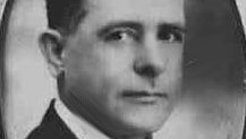
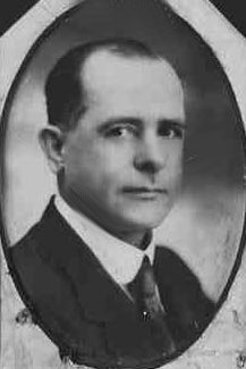
Born in County Cork, John Arthur Fihelly became one of Queensland’s most colourful public figures — a rugby pioneer, politician, journalist and passionate advocate for Ireland whose speeches brought him into conflict with the authorities during the turbulent years of World War I.
Among the many Irish immigrants who helped shape Queensland’s story, few led such a varied life as John Arthur Fihelly.
Born at Timoleague, County Cork, Ireland, on 7 November 1882, Fihelly arrived in Brisbane as a baby with his family in 1883. His parents were Cornelius Fihelly, a customs officer, and Anne McCarthy. Like many Irish families of the era, they made the journey across the world seeking a better future.
The young Fihelly grew up in Brisbane, attending Petrie Terrace State School and later St Joseph’s College, Gregory Terrace. He entered the workforce as a telegraph messenger with the Post Office at only 13, later moving into the Department of Trade and Customs.
But it was sport that first made him famous.
A pioneer of Queensland rugby
Fihelly was a powerful forward and talented rugby player. He represented Queensland against New South Wales and played for Australia against New Zealand in rugby union before becoming one of the pioneers of the new rugby league code.
When rugby league arrived in Queensland in 1908, Fihelly was among the men who helped establish the game. He represented Queensland in the early matches and travelled to Britain with the first Australian rugby league team in 1908–09 as assistant manager.
Later he became president of the Queensland Amateur Rugby League from 1914 to 1916, helping guide the sport during its formative years.
His sporting career gave him a public profile that would soon carry him into politics.
From journalist to Queensland Parliament
Fihelly was also a gifted writer and regularly contributed articles to the Labor newspaper The Worker from about 1906. His sharp opinions and strong debating style became well known.
In 1912 he entered Queensland Parliament as the Labor member for Paddington. He quickly rose through the ranks and became a minister in the Ryan Government, serving in roles including Assistant Minister for Justice, Secretary for Railways, Minister for Justice, Attorney-General and Treasurer.
He was considered an energetic and forceful politician — admired by supporters for his conviction and criticised by opponents for his outspoken nature.
Fihelly and the Queensland Irish Association
Fihelly’s Irish identity was central to his public life.
He was a prominent member of the Queensland Irish Association (QIA), which by the early 20th century had become one of Brisbane’s most important Irish community organisations. The QIA provided a place where Irish Queenslanders could celebrate their heritage, maintain cultural connections and discuss issues affecting Ireland and the Irish diaspora.
In 1916, following the Easter Rising in Ireland, Fihelly delivered a passionate speech at a Queensland Irish Association meeting criticising the British Government’s response to the rebellion. His comments caused a political storm. Governor Sir Hamilton Goold-Adams refused to speak with him afterwards, and Fihelly faced criticism within government circles.
The controversy came at a sensitive time. Australia was deeply divided over Ireland, loyalty and conscription, and Irish organisations across the country were under intense scrutiny.
Fihelly’s opponents accused him of disloyalty, while his supporters saw him as a man standing up for his Irish heritage and political beliefs. The episode became so associated with him that the term “Fihellyism” was used by critics as a political insult.
State funeral
Fihelly’s career later took him overseas when he became Queensland Agent-General in London from 1922 to 1924. After returning to Brisbane, he served as a Brisbane City councillor before declining health affected his later years.
He never lost his connection to public life or his Irish identity.
Fihelly died in Brisbane on 2 March 1945 after years of ill health following a serious accident. He was given a State funeral and buried at Toowong Cemetery.
Today, John Arthur Fihelly is remembered in several different ways: as a founder of Queensland rugby league, a Labor politician, a journalist and a passionate Irish Queenslander.
His life reflected the complexities of the Irish Australian experience — proud of his Irish roots while helping build the society he had inherited in Queensland.
For the Irish community of Brisbane, Fihelly remains a fascinating figure: a Cork-born immigrant’s son who helped shape Queensland sport, politics and the public debate about Ireland during one of the most turbulent eras in history.

