
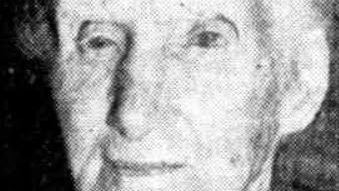
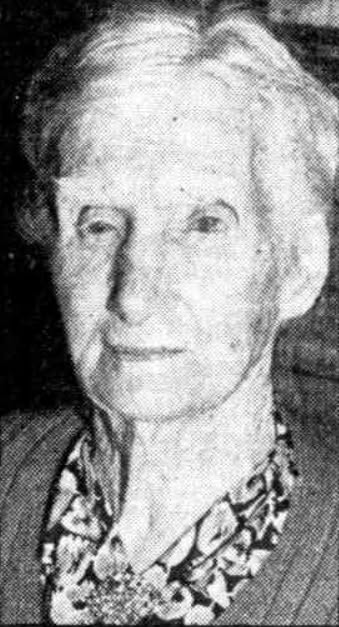
Born in Dublin on August 28, 1843, Amelia Mary Ann Williams could never have imagined that her life would become one of the most remarkable stories of survival in Queensland’s pioneering history.
She arrived in Australia as an infant with her parents, who settled near Rockhampton, where Amelia grew up in the fledgling colony. After leaving school she worked as a tailoress, but it was her marriage in 1877 to bullock driver Edwin Wilkinson that would define the extraordinary life that followed.
Edwin earned his living hauling supplies by bullock dray to the remote pastoral stations of western Queensland before returning to the coast laden with wool. In those days a carrier’s wagon was far more than transport – it was the family home. Everything the Wilkinsons owned travelled with them as they crossed the vast inland.
Their unusual household even included goats for milk and chickens carried beneath the wagon in a wooden crate. Whenever the team camped, the birds were released to forage before returning at the crack of Edwin’s whip. Fresh milk and eggs were often the only luxuries available in a landscape where settlements were separated by hundreds of lonely miles.
It was in this harsh and isolated world that Amelia raised one of Queensland’s largest pioneering families.
Fourteen of her sixteen children were born beneath the shelter of the carrier’s wagon, without the assistance of a doctor, nurse or midwife.
Years later she laughed at the suggestion that medical help could have been available.
“Doctor? Nurse? Never saw one,” she recalled. “The nearest doctor was at Charters Towers, and we’d have had to walk several hundred miles to bring him. The baby would have been walking before he arrived.”
Necessity forced Amelia to become doctor, nurse, teacher and protector. When illness struck she cared for her children herself. If one broke a limb, she expertly reset the bone and fashioned splints from ti-tree bark. With no schools in the western districts, she also educated her growing family, teaching them to read, write, say their prayers and, as she proudly put it, “stick to the principles of the bush.”
Her generosity extended beyond her own family. After a friend died in Winton, Amelia adopted the woman’s two orphaned children and raised them alongside her own.
Yet the hardships of life in the Queensland bush came at an unimaginable cost.
One of the family’s greatest tragedies occurred when three-and-a-half-year-old Andrew wandered away on Marathon Station near the Flinders River while following an older brother who had gone to gather bullocks. Police, Aboriginal trackers and around fifty bushmen searched the station for six agonising days.
Fearing dingoes had taken him, Amelia eventually learned the heartbreaking truth. The little boy had crawled beneath the exposed roots of a coolabah tree beside a dry billabong, where he died alone before rescuers reached him.
There were further sorrows. Shortly after giving birth to one of her children, Amelia rose from her bed only three days later to bury two sons who had been killed instantly by the same lightning strike. Other children succumbed to fever during the family’s endless journeys across the west.
Then, on Christmas Eve 1901, tragedy struck again when her husband Edwin died, bringing to an end more than two decades of life on the road.
Two years later Amelia married Hugh Johnstone, the surname by which she would become best known.
Most people would have considered retirement after enduring such a life, but Amelia was not most people.
At the age of 67 she decided to formally train as a nurse, turning the practical medical skills she had learned through necessity into a profession. She qualified and continued nursing for many years, remaining in practice until only four years before the death of her second husband.
Her family’s military service also brought both pride and grief. One of her sons was killed during the First World War, and while living in Cloncurry Amelia led the returned soldiers each Anzac Day to lay a wreath at the town’s war memorial in his honour.
In 1938, after decades in Queensland’s rugged inland, Amelia moved to Brisbane to live with her youngest daughter in West End.
City life failed to impress the tough old pioneer.
Interviewed by a newspaper, she delivered her verdict in characteristically blunt fashion.
“Brisbane is a dirty old hole, not fit to live in. It’s a dirty, unfaithful place to put a woman,” she declared. “I haven’t been out since I’ve been here. I just can’t be bothered.”
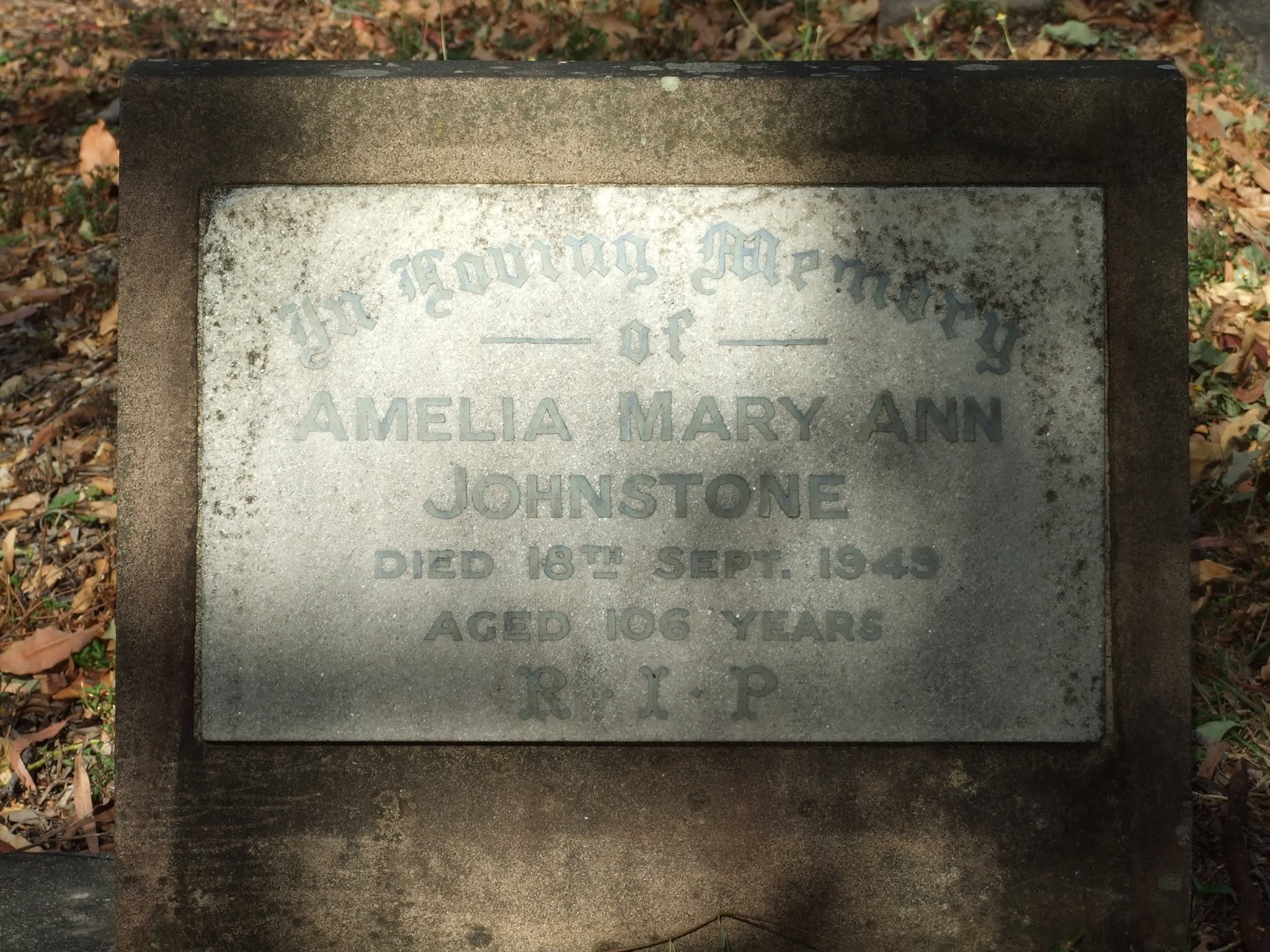
Amelia celebrated her 106th birthday in August 1949, with her family believing she was the oldest woman in Queensland, if not Australia. Although blind in her later years—a condition she blamed on the dust storms of western Queensland—she remained mentally sharp, active and retained the dry humour that had sustained her through a lifetime of hardship.
A month later she contracted a chill and died peacefully at the West End home of her daughter, Mrs H. E. Woodall, on Montague Road.
The Irish-born bush matriarch who had crossed Queensland by bullock wagon, delivered babies beneath the stars, buried children, nursed neighbours and helped build the state’s western frontier was laid to rest in Portion L of South Brisbane Cemetery.
Her remarkable life remains one of the great untold stories of Queensland’s Irish pioneers.
Sources: Trove and Friends of South Brisbane Cemetery

