
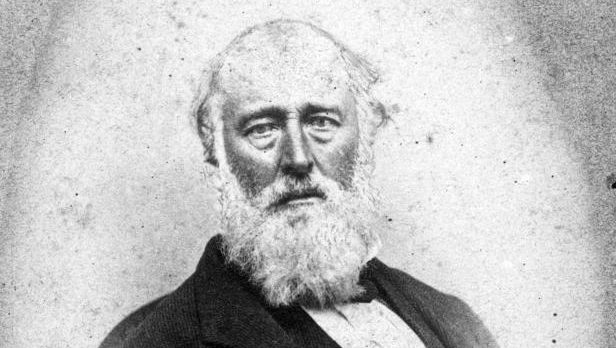
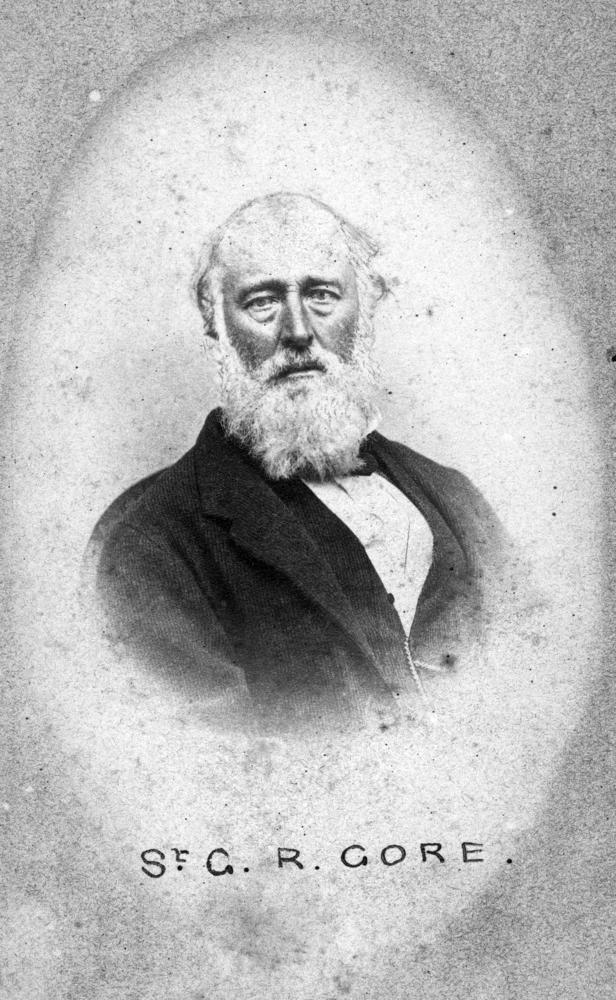
Irish-born lawyer turned Darling Downs landowner and politician
St George Richard Gore (1812 – 1871) was an Irish-born barrister from Dublin who became a major Darling Downs pastoralist and early Queensland politician, helping shape the colony’s land and government systems in the 1860s.
Born in Dublin in 1812 into an Anglo-Irish family connected to the Gore baronet line, he was educated at Trinity College Dublin and trained for the law, being called to the English Bar before abandoning legal practice and emigrating to Australia in 1840.
He arrived in Sydney with his family and soon moved into the frontier pastoral expansion of the Moreton Bay district, taking up land on the Darling Downs (Yandilla run) with his brothers in the early 1840s. This placed him among the first wave of European landholders establishing large grazing estates in what would become Queensland.
Gore became part of the emerging squatter elite, managing large pastoral properties including Yandilla, Bodumba, and later Lyndhurst near Warwick. His wealth and influence came directly from land acquisition and wool production during the colony’s early expansion phase.
He entered politics at the time of Queensland’s separation, being elected to the first Legislative Assembly seat for Warwick in 1860. He later moved into the Legislative Council and held senior ministerial roles including Secretary for Lands and Works and Postmaster-General, placing him at the centre of land administration during a critical period of settlement and expansion.
Gore surrendered his Bodumba and Canning Creek leases in 1869 and acquired a stud property, Lyndhurst, near Warwick. Gore remained a key figure in both pastoral and political circles until his death in Warwick in 1871. He is commemorated by a statue in Warwick, a street in Toowoomba, a highway and a railway station.

