
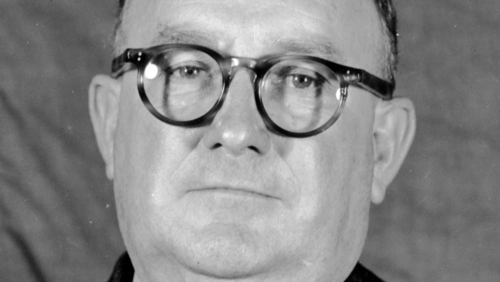
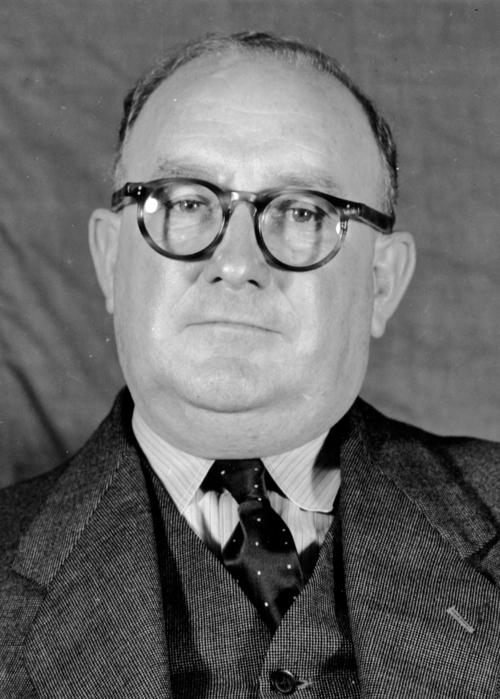
Queensland Premier, diplomat, Irish Catholic political leader
Vincent Clare (often recorded as Clair) Gair (1901–1980) was one of the most colourful and consequential figures in twentieth-century Queensland politics. Premier of Queensland from 1952 to 1957, he later became a Democratic Labor Party senator and, in the final chapter of his public career, served as Australian Ambassador to Ireland from 1974 until 1976.
Gair was born in Rockhampton on 25 February 1901, the eighth of ten children. His father, John Alexander Gair, was Scottish-born, while his mother, Catherine Mary Maguire, was Irish-born and had a particularly strong influence on her son’s political development. A politically active supporter of the emerging Labor movement, she took young Vince to political meetings, helping foster the interests that would shape his future career.
Educated at St Joseph’s Christian Brothers College in Rockhampton and raised in the Catholic faith, Gair left school to join the Queensland Railways as a clerk. After moving to Brisbane with his family, he became increasingly active in the Australian Labor Party and won the South Brisbane seat in the Queensland Parliament in 1932.
His rise through government was gradual but substantial. He served in ministerial portfolios including Mines and Labour and Industry, became Deputy Premier in 1947 and Treasurer in 1950, before succeeding Ned Hanlon as Premier in January 1952. Gair led Queensland through a period of relative post-war prosperity and won two state elections before the dramatic Labor split of 1957 brought his premiership to an end.
The split did not end his political career. After breaking with the ALP, Gair helped establish the Queensland Labor Party, which later became associated with the Democratic Labor Party. He subsequently entered federal politics as a Queensland senator and became leader of the DLP in the Senate.
Gair’s Irish heritage and Catholic background were important elements in his identity, although his politics cannot simply be described as Irish-Catholic: he was also a staunch anti-communist and, somewhat paradoxically for a Labor leader, a committed monarchist. His appointment by the Whitlam Government as Australian Ambassador to Ireland in 1974 nevertheless brought his long public life to an appropriate geographical conclusion. He served in Dublin until January 1976, returning to Queensland afterwards.
From the railway office to the Queensland premiership, the Senate and the Australian embassy in Dublin, Vince Gair’s career reflected both the opportunities and the deep political divisions of twentieth-century Australian public life. His Irish-born mother, Catholic upbringing and lifelong engagement with Labor politics also make him an important figure in the story of Queensland’s Irish community.
Picture: Queensland State Archives


