
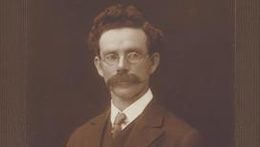
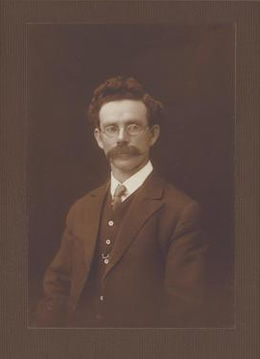
Labour leader who rose from postman to Attorney-General
Born in Loughlinstown, near Dublin, in 1871, John Mullan grew up an orphan but carried with him the resilience and quick wit that would mark his political career. Educated in Dublin’s national and private schools, he emigrated to Australia in 1888, working first as a clerk in Melbourne before moving to Charters Towers, Queensland. There he joined the Post and Telegraph Department and quickly became known for his intelligence, eloquence and fiery debating skills — qualities that would make him a formidable figure in Queensland’s early Labor movement.
Mullan was a founding member of the Charters Towers Literary and Debating Society and soon turned his energy to the cause of workers’ rights. He organised for the Miners’ Union and later the Amalgamated Workers’ Association, bringing to politics the conviction that “industrial organisation and politics must go hand in hand.” Elected to the Queensland Parliament in 1908, and later to the Senate in 1913, he became one of Labor’s most passionate debaters — nimble, witty and unrelenting in defence of working people. His Irish humour and oratorical flair made him a crowd favourite, while his opposition to conscription and support for social reform earned him deep respect across the party.
Returning to state politics after his Senate defeat, Mullan served as Attorney-General from 1920 to 1929 and again from 1932 to 1940, guiding major reforms in workers’ compensation, juries and tenancy law. Known affectionately as “Johnny” Mullan, he combined genial charm with a fierce democratic spirit, helping shape Queensland’s modern Labor identity.
When he died in 1941, he was accorded a state funeral at St Stephen’s Cathedral and buried in Toowong Cemetery — an Irish immigrant who rose from humble beginnings to become one of Queensland’s most trusted public men and a loyal champion of the working class.

