
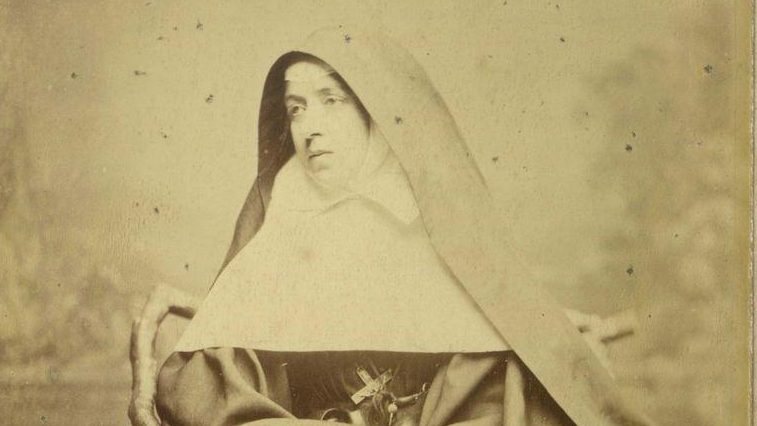
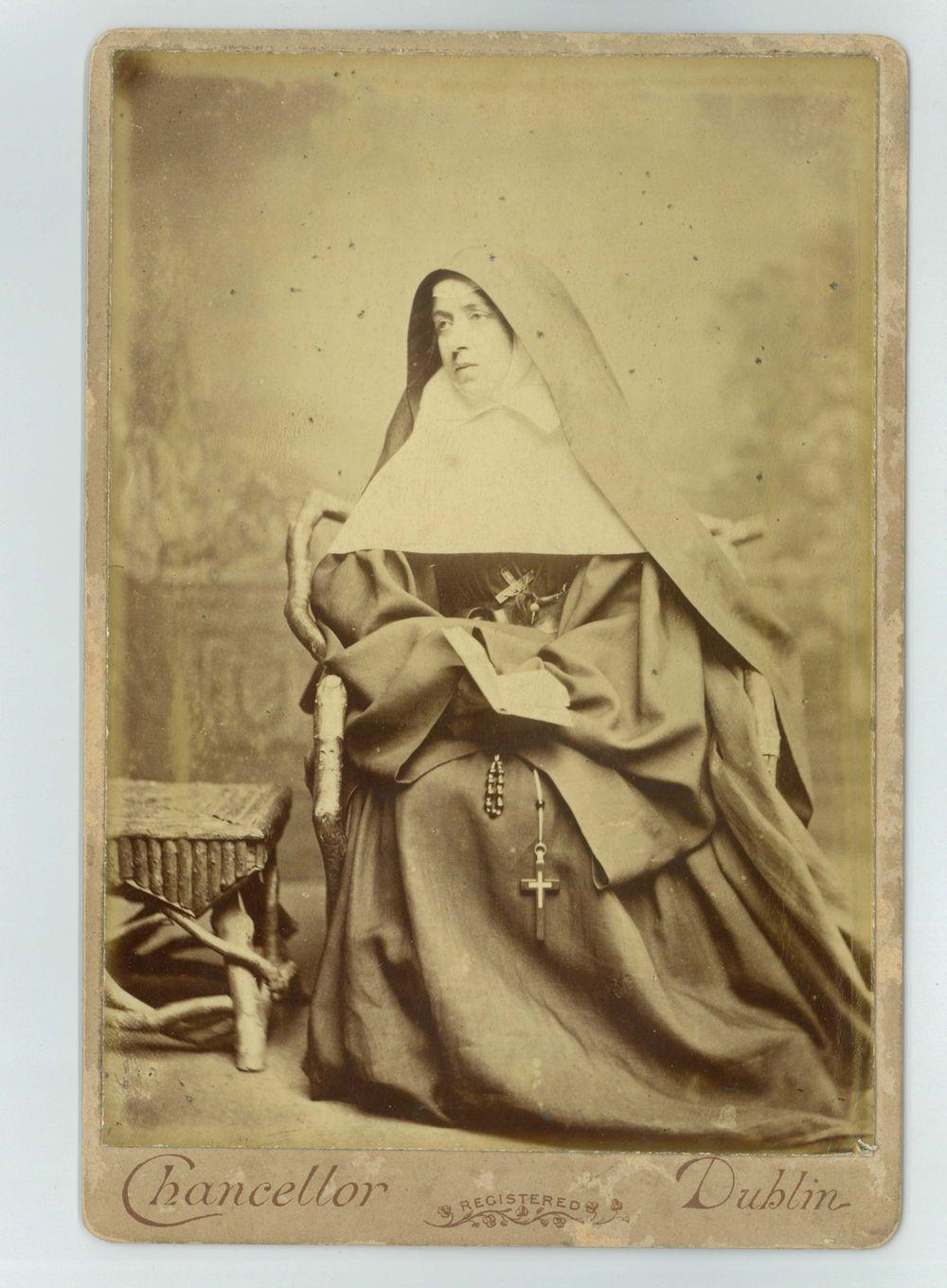
Nun, educator, founder of Sisters of Mercy work in Queensland
Mother Mary Vincent Whitty (née Ellen Whitty) (1819 – 1892) was an Irish Sister of Mercy who became a pioneering figure in education and social service in Queensland.
Born Ellen Whitty near Oilgate, County Wexford, Ireland, in 1819, she grew up during a turbulent period in Irish history marked by poverty, emigration and social upheaval. She entered the Sisters of Mercy in Dublin, joining a religious order known not only for prayer, but for practical work among the poor, especially women and children.
Her life changed dramatically in 1861 when Queensland’s first Catholic bishop, James Quinn, invited the Sisters of Mercy to the new colony. At the time Brisbane was still rough, isolated and lacking many basic institutions. Whitty led a small group of six Sisters on the long sea voyage to Australia, becoming the first women religious to serve in the Brisbane diocese.
What they encountered was a frontier town with few resources and enormous expectations. The Sisters initially lived in cramped and difficult conditions, but Whitty quickly emerged as an organiser, fundraiser and administrator with remarkable determination. Within months, the foundations were laid for what would become one of Queensland’s best-known Catholic schools — All Hallows’ School.
Under Mother Vincent’s leadership, the Sisters of Mercy expanded far beyond Brisbane. New convents and schools were established across Queensland, often in remote or underdeveloped districts where educational opportunities for girls were extremely limited. In many places, Mercy schools became some of the first structured educational institutions available to Catholic families.
Whitty believed strongly that girls deserved serious education, not merely domestic instruction. At a time when many women had few opportunities beyond marriage or service work, the Mercy schools taught literacy, discipline, music, teaching skills and academic subjects that helped broaden opportunities for generations of Queensland women.
Her work extended beyond classrooms. The Sisters cared for the poor, visited the sick, supported migrants, and provided practical assistance to struggling families in the growing colony. The order also became deeply involved in training teachers, helping create a more stable Catholic education system across Queensland.
One of the remarkable aspects of Whitty’s story is the sheer scale of what was achieved from such fragile beginnings. When she arrived in Brisbane there were only a handful of Sisters and limited infrastructure. By the time of her death in 1892, the Mercy network had spread across much of Queensland and become one of the colony’s major educational and charitable forces.
Although quiet and deeply religious by temperament, Mother Vincent was also known for resilience, administrative skill and the ability to keep institutions functioning despite financial pressures, long distances and the hardships of colonial life. Like many Irish religious women in Australia, she combined spiritual commitment with relentless practical work.
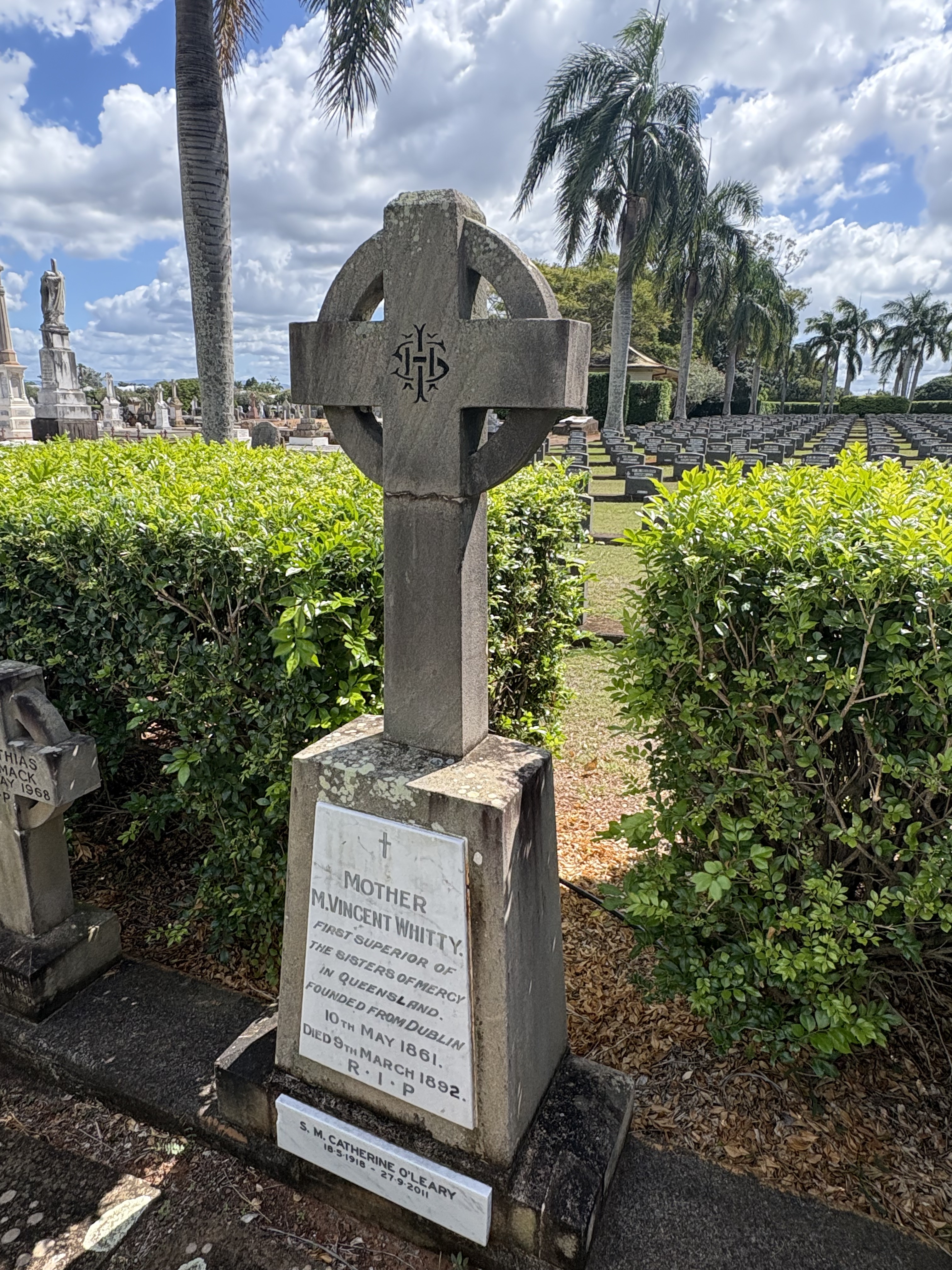
She died in Brisbane in 1892, leaving behind a legacy still visible in Queensland schools, convents and Catholic social services more than a century later. She is buried in Nudgee Cemetery.
 Irish Queenslander