
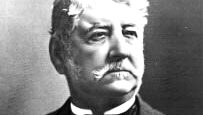
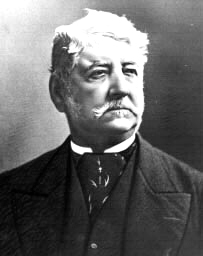
Sir Arthur Edward Kennedy (1810 – 1883) was Governor of Queensland from 1877 to 1883.
Born in 1810 at Cultra in County Down, Ireland, Kennedy came from the Anglo-Irish Protestant gentry and began adult life not in politics, but in the military. He served in the British Army before moving into imperial administration, beginning a long colonial career that took him across the British Empire at a time when London was tightening control over rapidly expanding colonies.
Before reaching Queensland, Kennedy had already governed a remarkable list of territories including Sierra Leone, Western Australia, Vancouver Island and Hong Kong. By the time he arrived in Brisbane in 1877, he was considered an experienced imperial troubleshooter — calm, disciplined and politically cautious.
Queensland itself was still a young colony, having separated from New South Wales less than two decades earlier. What Kennedy stepped into was a place exploding with growth. Railways were pushing inland, immigration was increasing, ports were developing, and mining and pastoral fortunes were reshaping the economy almost yearly.
Unlike some governors remembered for dramatic confrontations, Kennedy’s style was measured and administrative. He worked closely with Queensland ministries while helping guide the colony through a period of rapid expansion in infrastructure and settlement. During his governorship, railway construction accelerated, immigration schemes continued bringing newcomers into Queensland, and Brisbane itself was beginning to evolve from a rough colonial town into a more established city.
One of Kennedy’s strengths was his experience. Having governed frontier colonies across several continents, he understood the practical realities of colonial administration better than many political appointees sent out from Britain. He was known for attention to detail, orderly government, and maintaining stability in fast-changing environments.
But his years in Queensland were not entirely easy. The colony still faced sharp political tensions over land, labour and frontier violence.
He remained governor until his death in office in Brisbane in 1883, one of the few Queensland governors to die while serving. His funeral became a major colonial event, reflecting the status he held within Queensland’s political and administrative establishment.
Today Kennedy’s name survives across the state in places such as the Kennedy electorate, Kennedy region and Kennedy Highway — reminders of how deeply colonial administrators shaped Queensland’s map and institutions during the nineteenth century.
Toowong Cemetery had only recently opened when Kennedy was buried there, and his grave became part of the cemetery’s early “establishment” section — the resting place of many of colonial Queensland’s senior political, legal and civic figures.
 Irish Queenslander